Uncategorized

MSA: Al Kitaab Two – Lesson 7
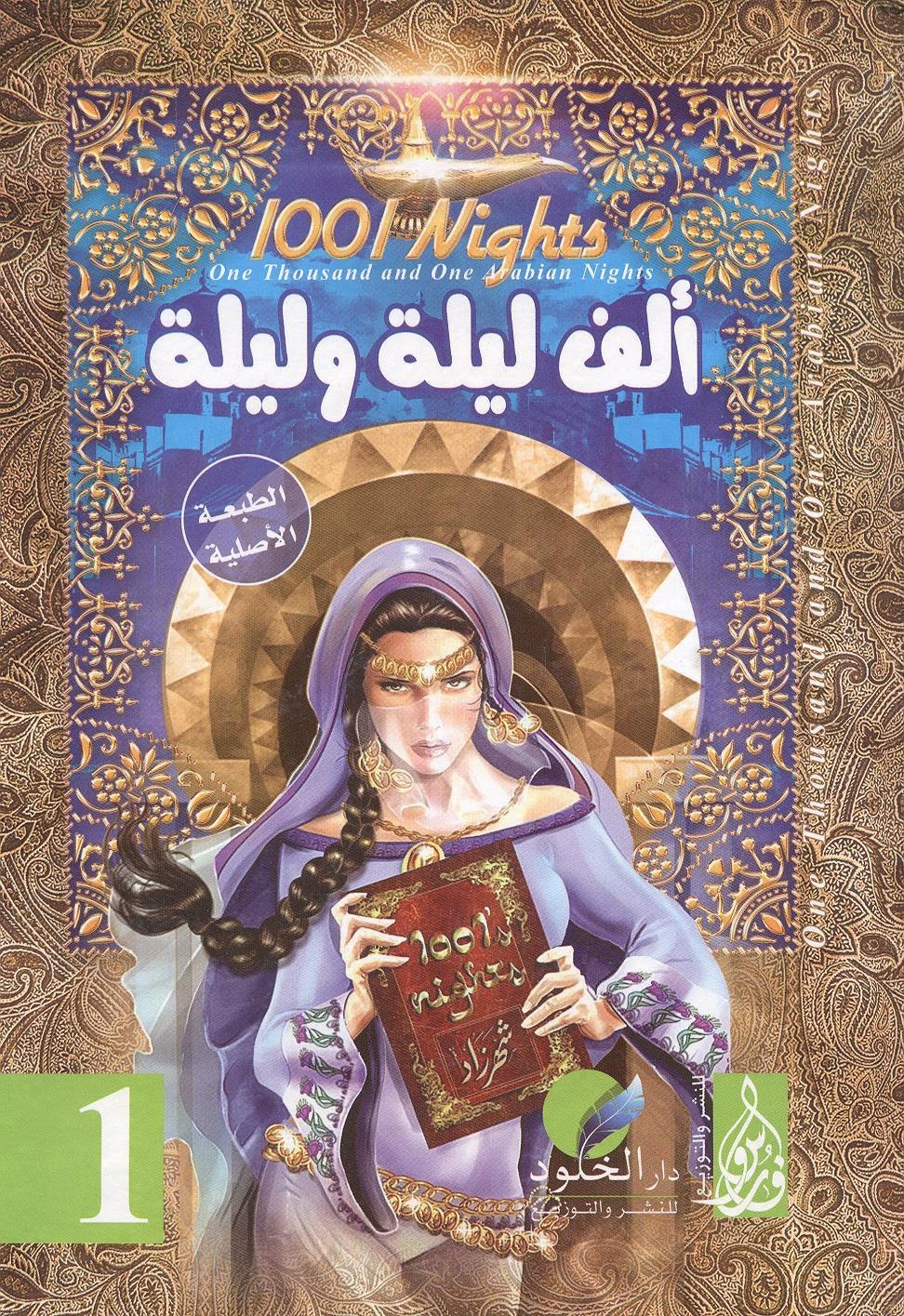
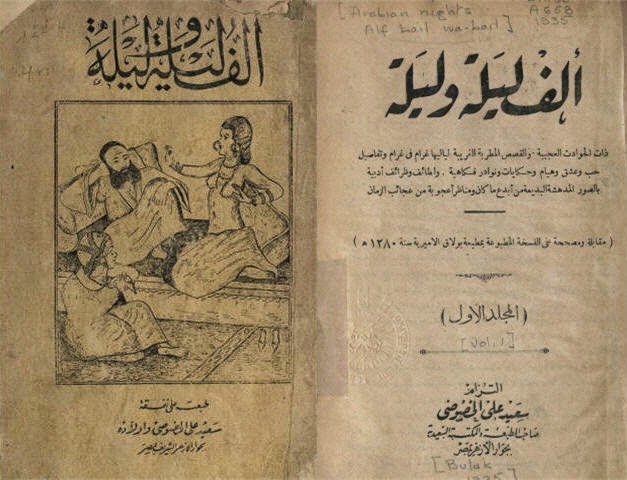
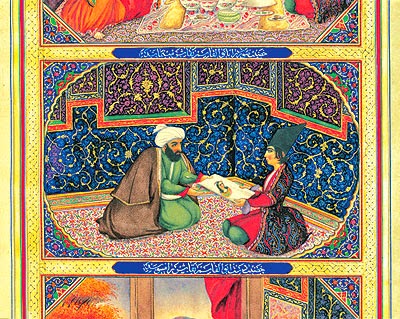
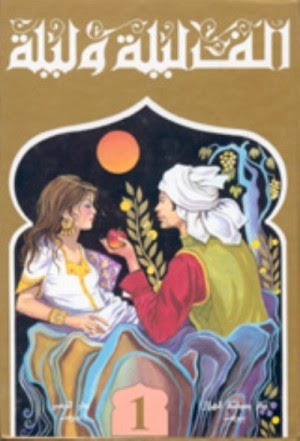
ألف ليلة وليلة

=============================
-=============================
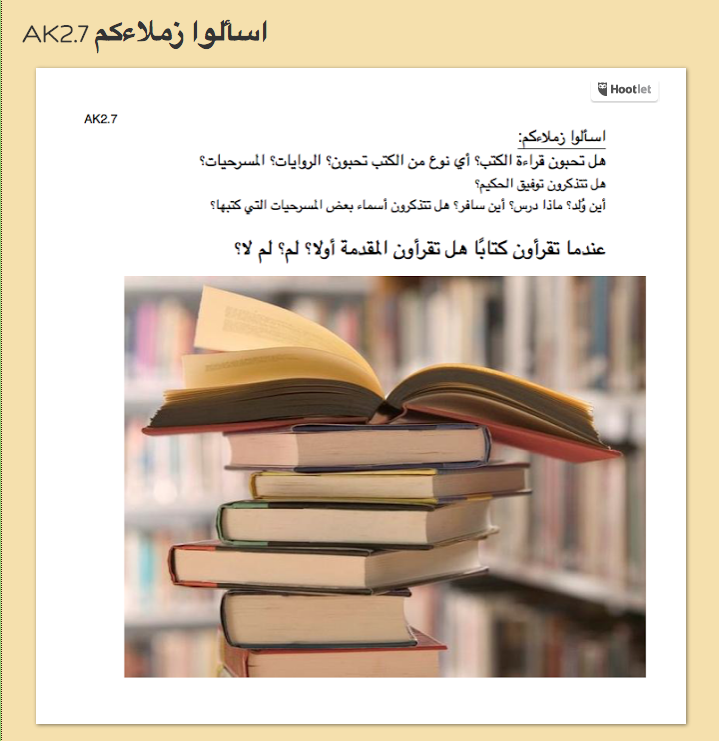
اسألوا زملاءكم
——————————————————————-
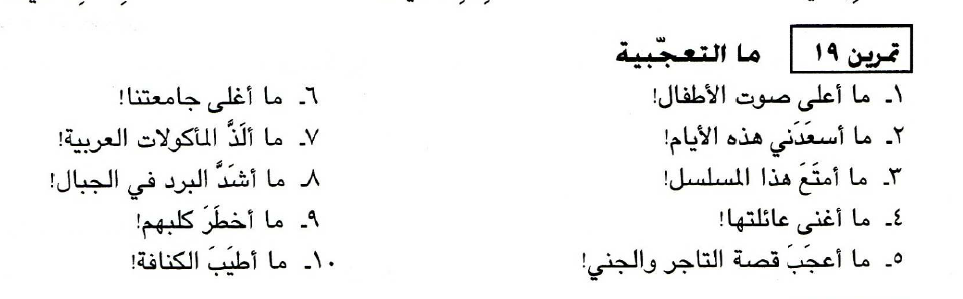
======================
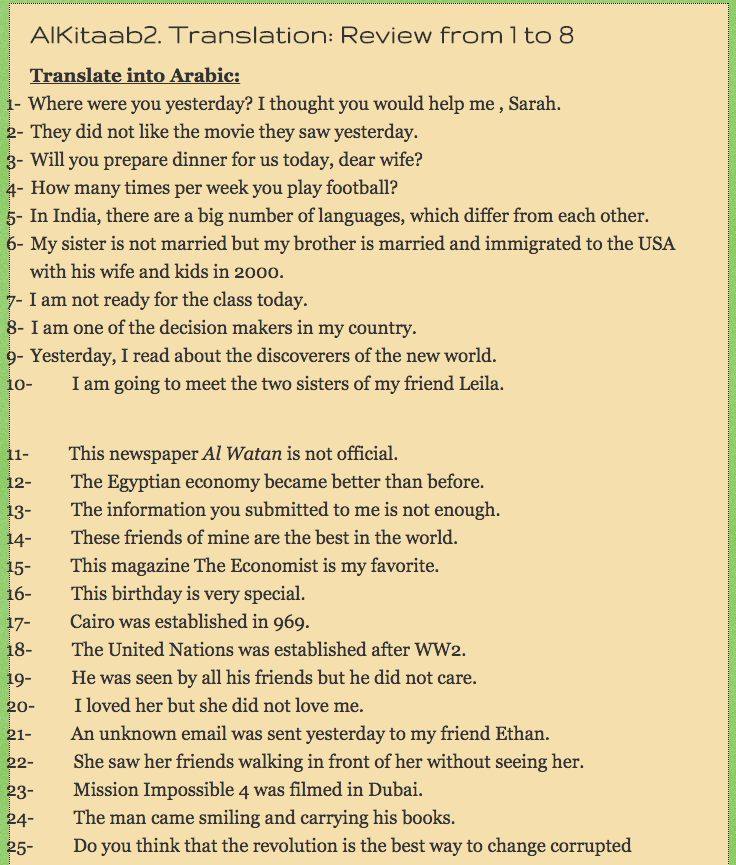
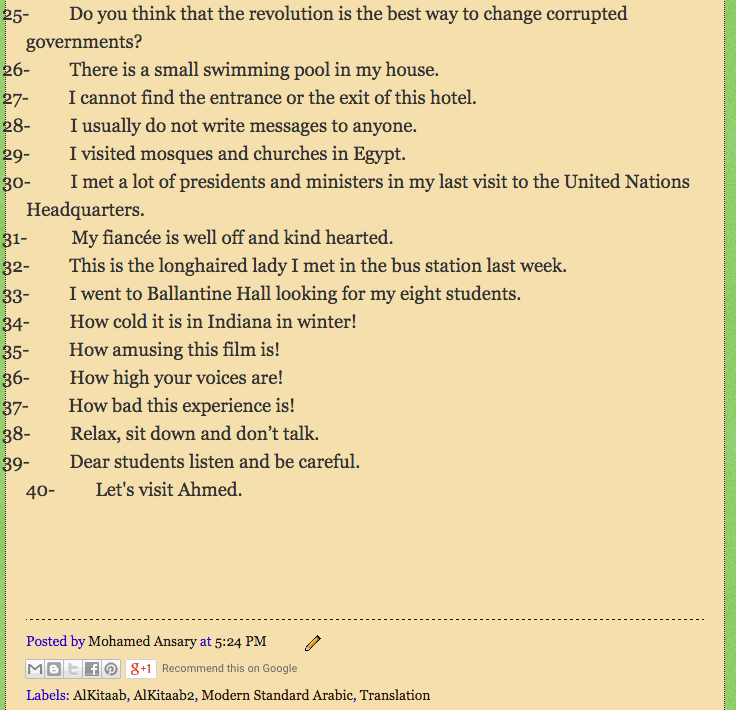
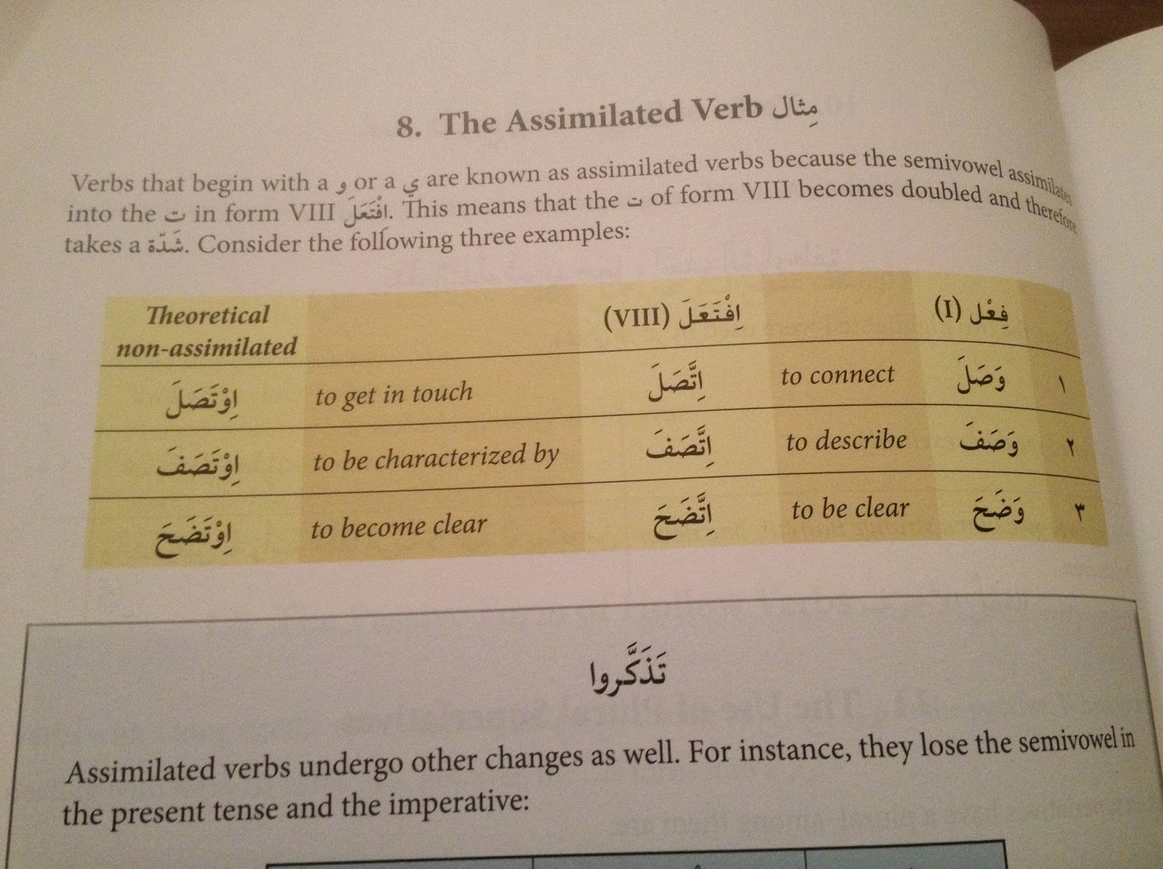
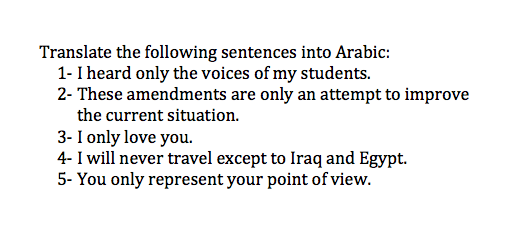
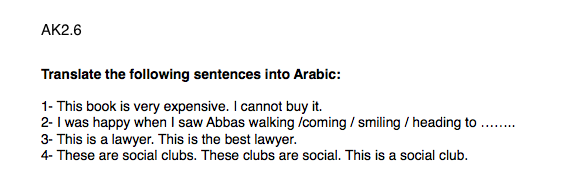
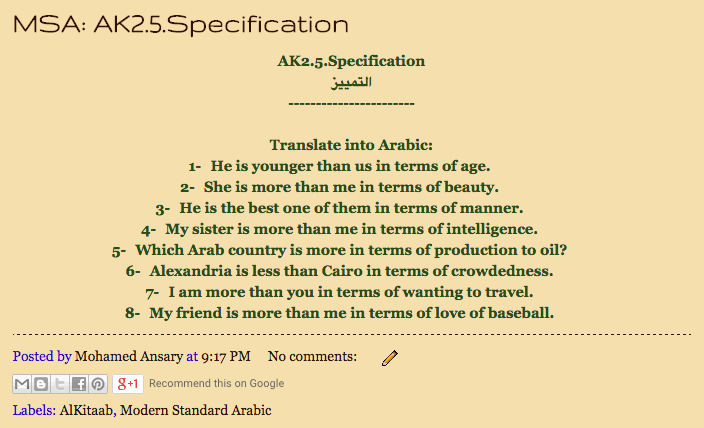
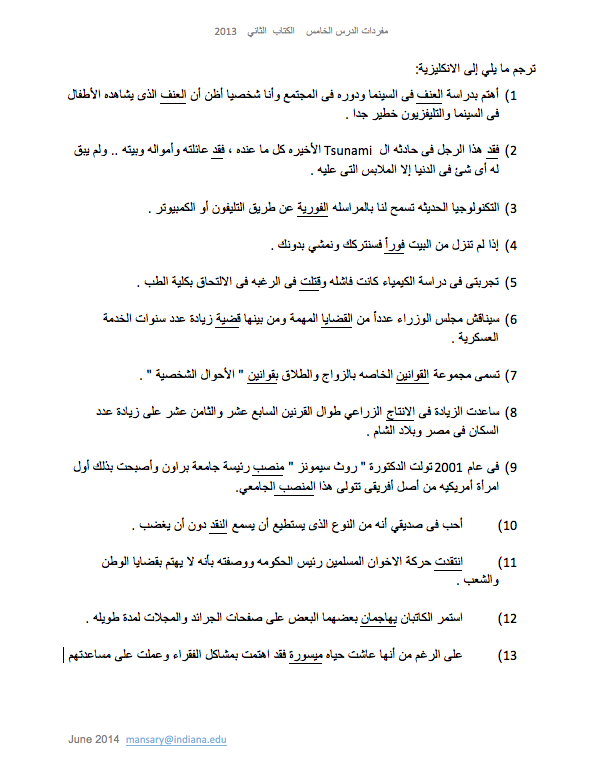
Translate from English to Arabic:
MSA: Translation based on the grammatical rules form lesson one to lesson 7 from Al Kitaab Two
Translate the following sentences which are based on the grammatical rules form lesson 1 to 7 from Al Kitaab Two.
1-I passed the street. I stopped then continued again.
2-I saw the man carrying the books and smiling.
3-He is from KSA, which is the biggest country in terms of production of oil. I am older than him in terms of age.
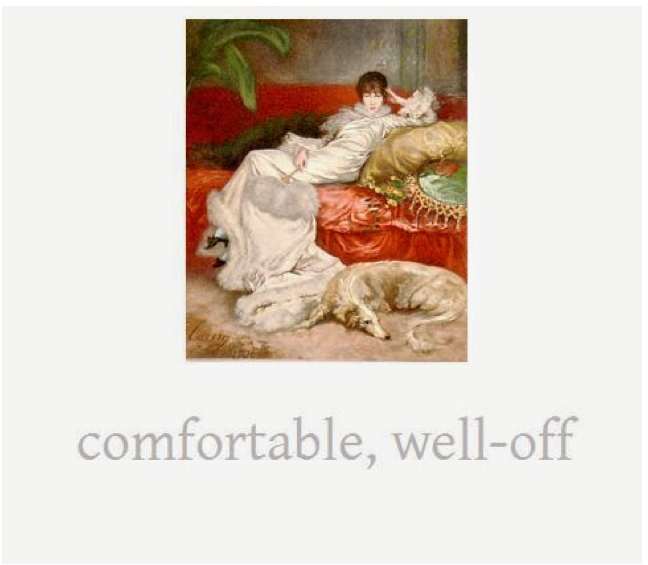
4-He is very kind hearted and well off.
5-He speaks the most eloquent language.
6-She is from Great Britain.
7-The English language is used in a lot of regions in the world.
8-These are enough seats.
9-I got to know a lot of people in the USA and they were very nice with me.
10-Don’t betray your country.
11-Say that you love me.
12-Sarah, stop.
13-John, put the ball on the table. Sleep. Respect yourself.
14-Let’s go to the cinema.
15-Ahmed and Mohamed, please read this letter.
16-The glass was broken.
17-The homework was written yesterday.
18-The man was killed last week.
19-Mona was born in Alexandria.
20-The movie was produced in 1990.
21- I like this newspaper Al Ahram a lot.
22- This christmas is very different because I will spend it with my friends in Egypt.
21- I like this newspaper Al Ahram a lot.
22- This christmas is very different because I will spend it with my friends in Egypt.
=================================
=======================================
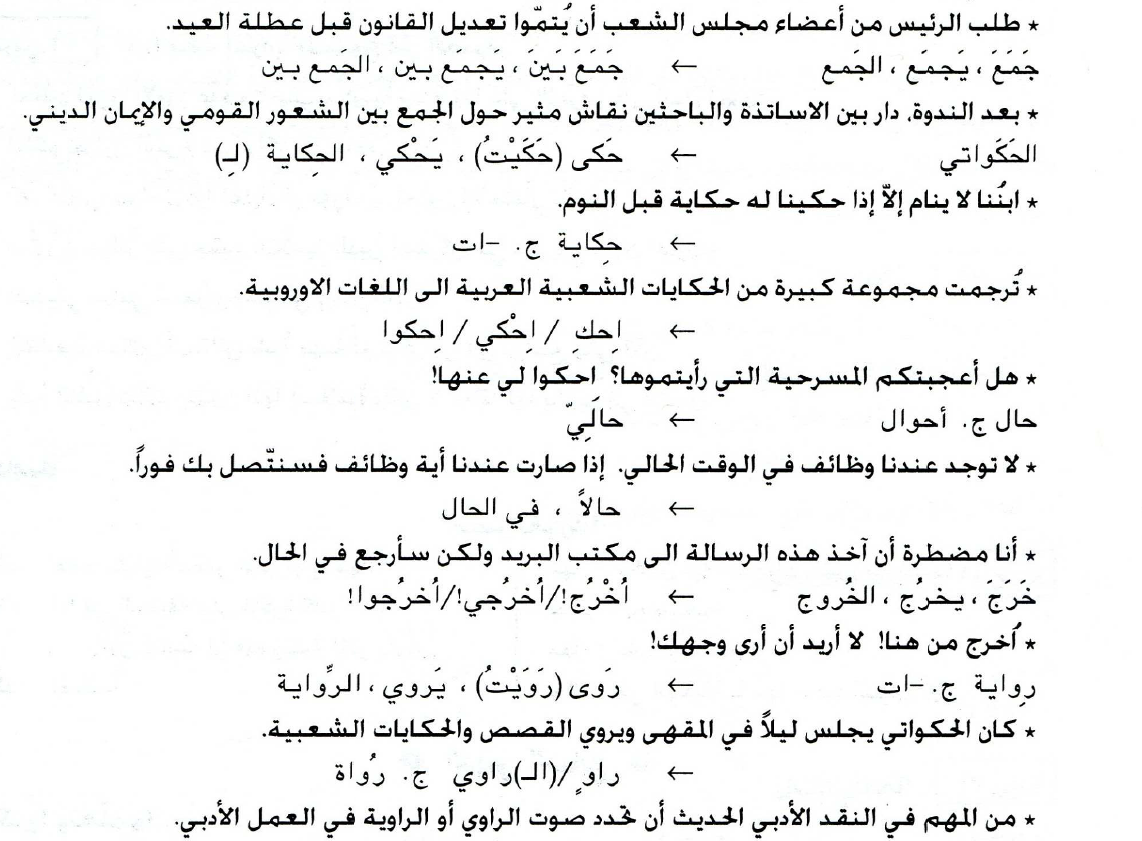
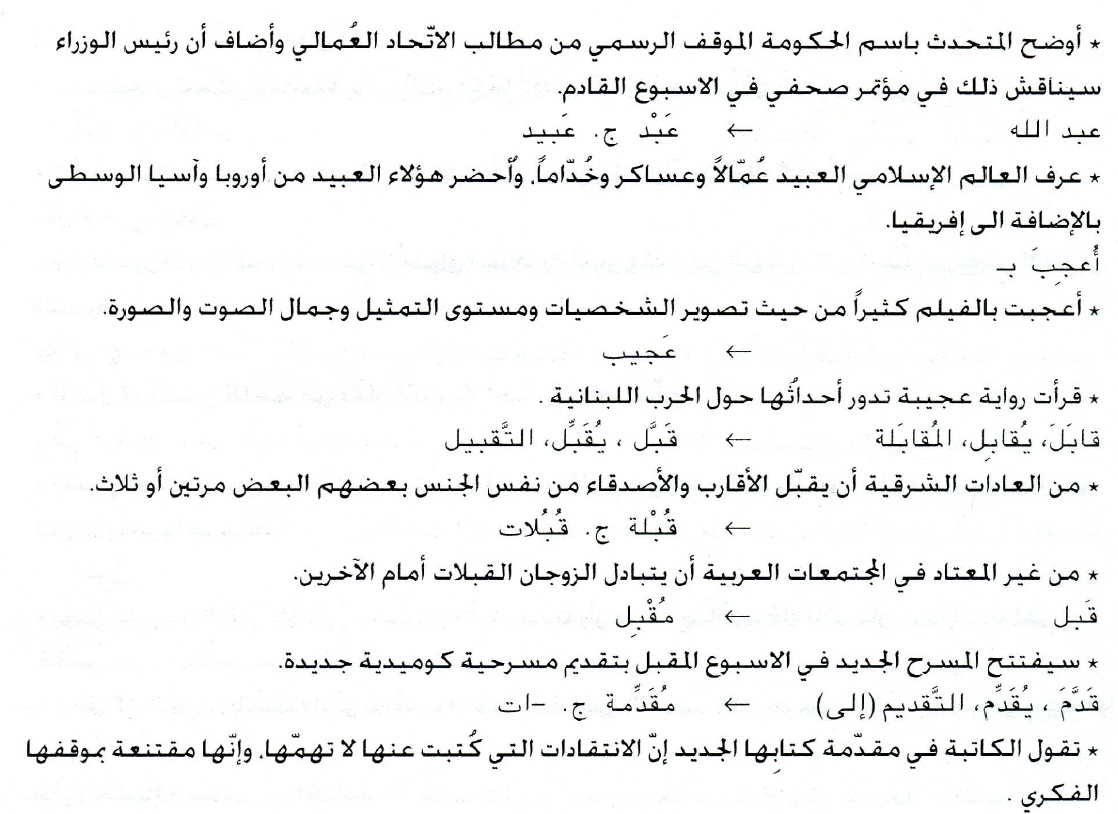
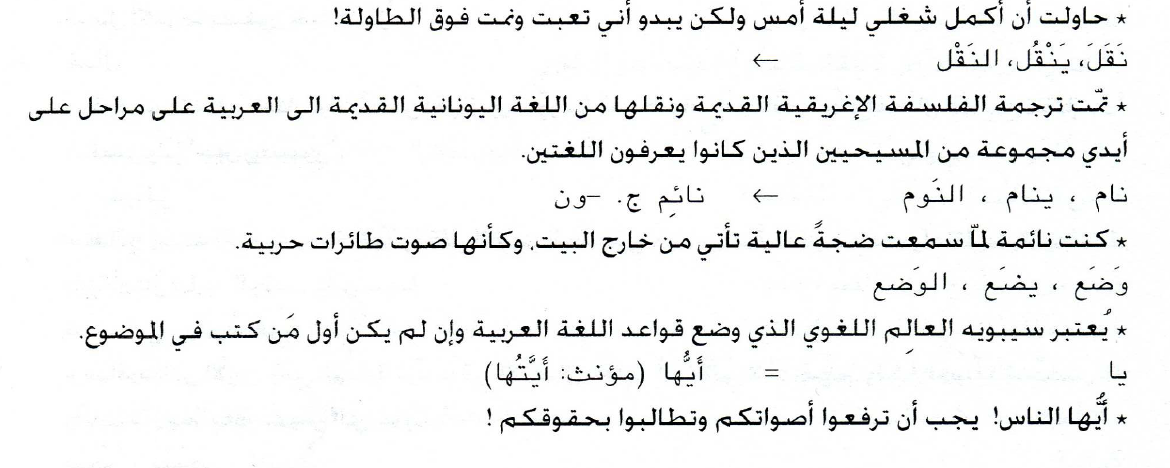
============================
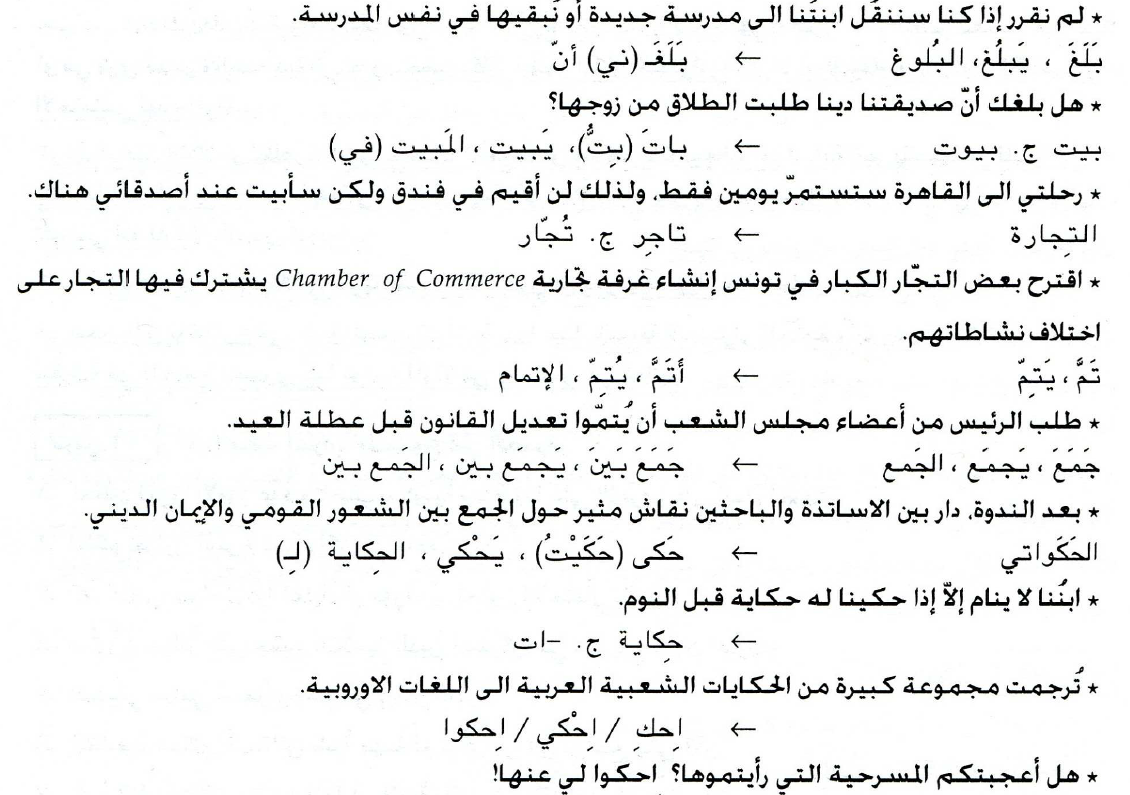
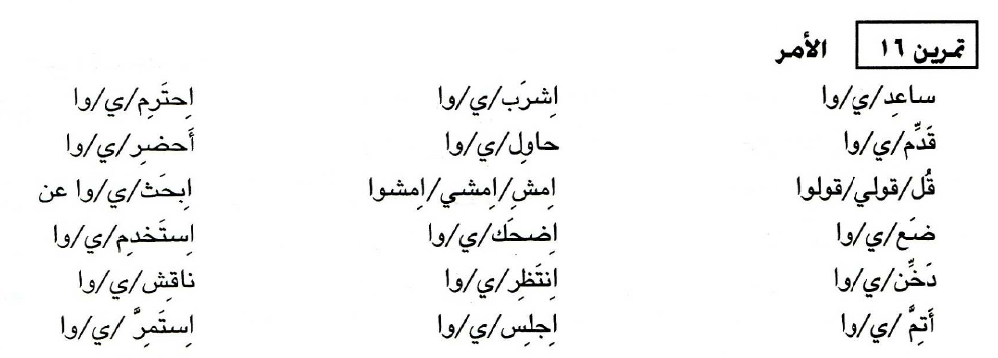
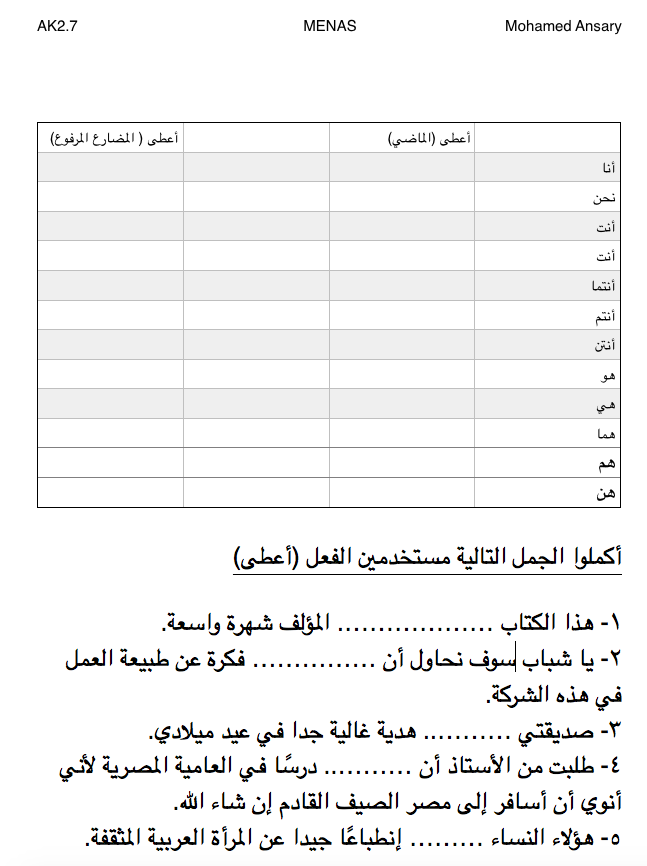
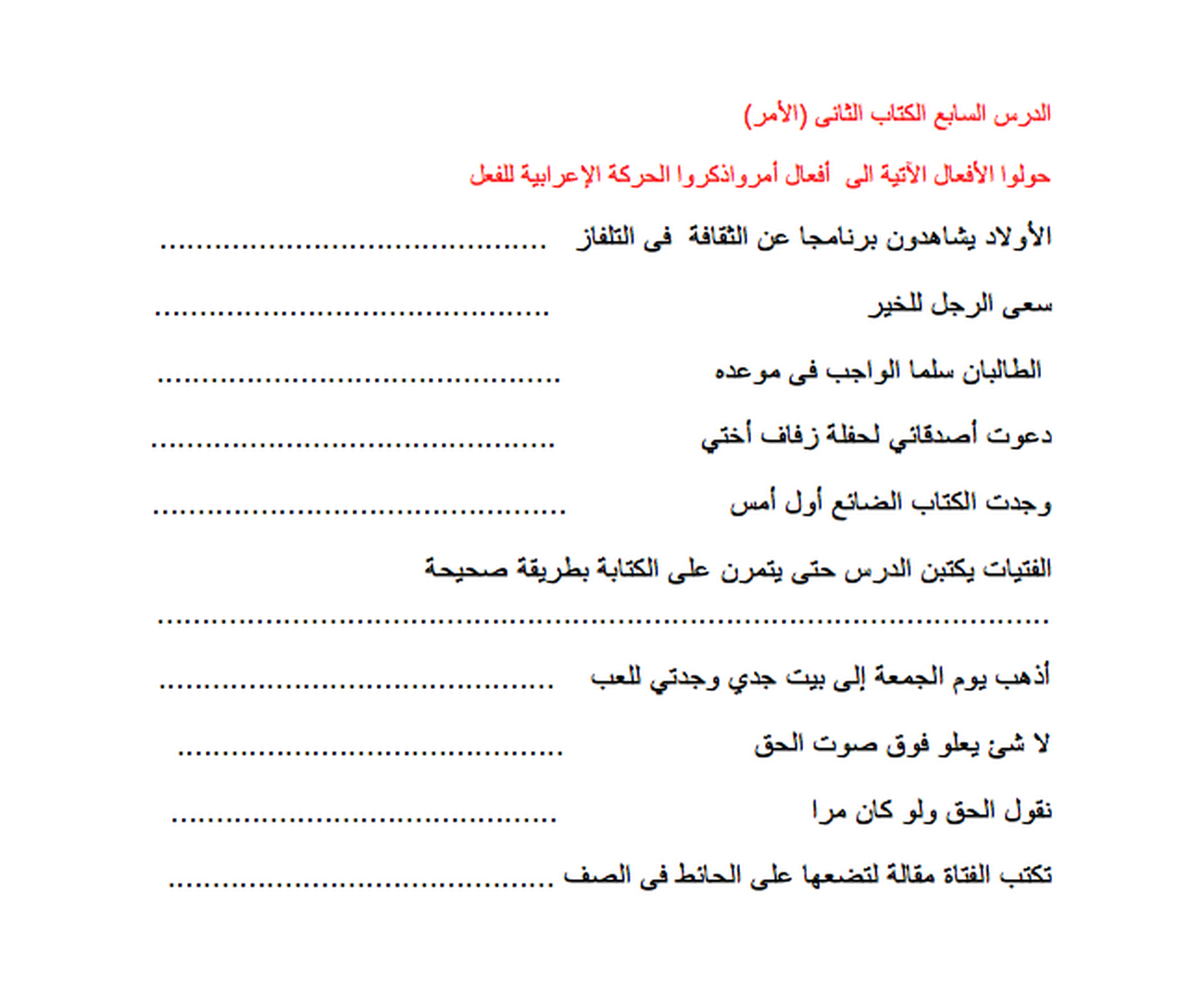
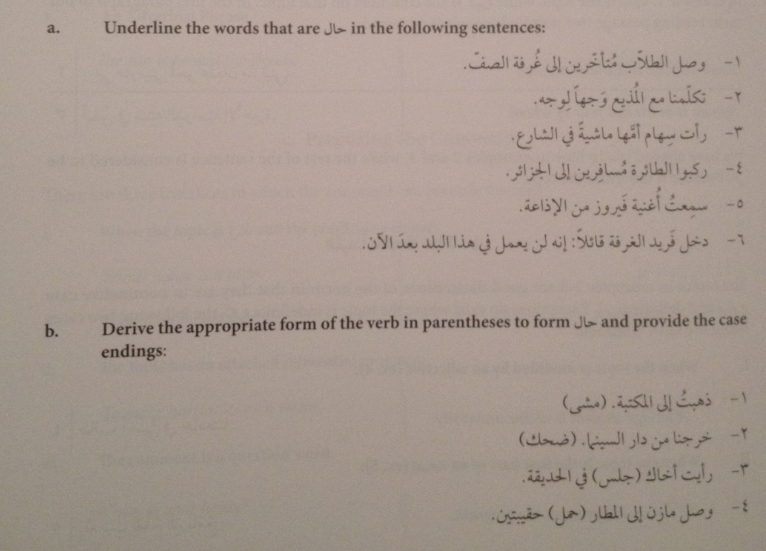
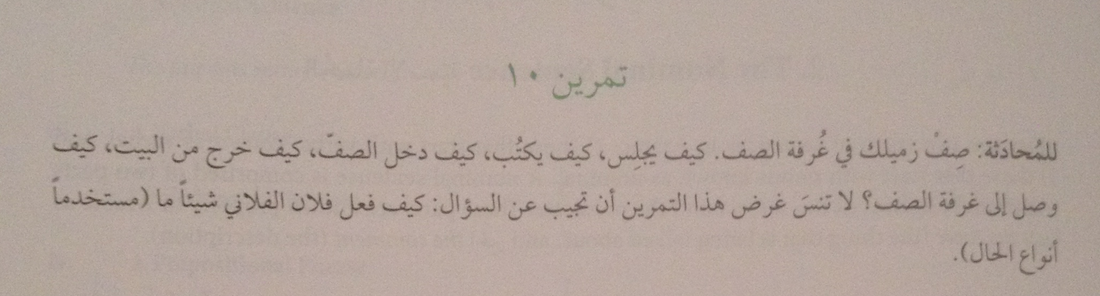
Imperative
الأمر
======
============================
http://www.mohamedansary.com/2014/10/ak27_15.html
===================================
=====================================
http://www.mohamedansary.com/2014/10/ak27_13.html
=====================================
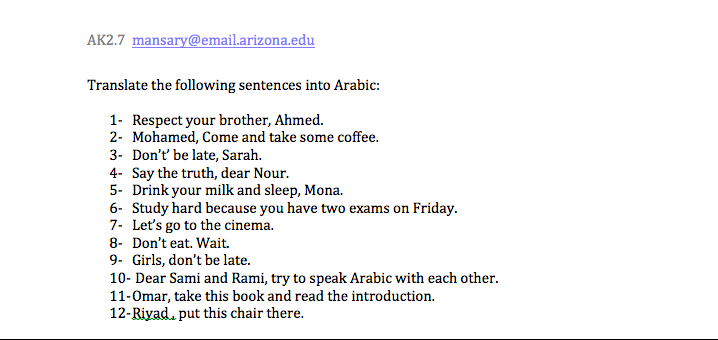
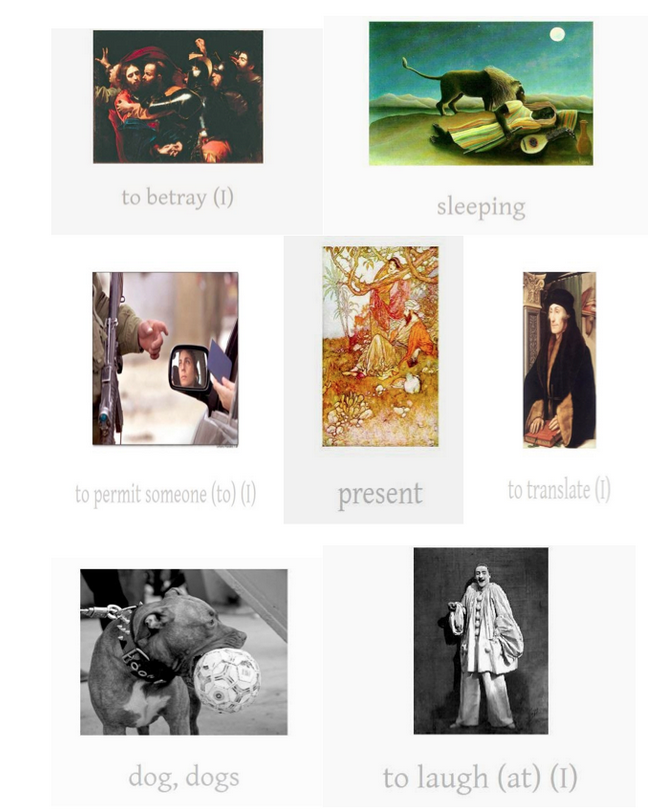
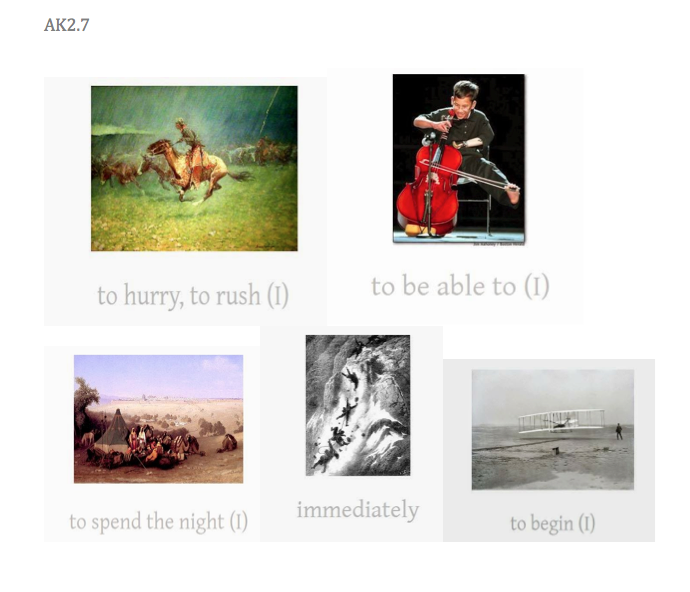
تفعيل المفردات من خلال صور الأفعال فقط
http://www.mohamedansary.com/2014/10/ak27.html#more
==============================================
http://www.mohamedansary.com/2015/06/ak2-eye-vocab.html
==============================================
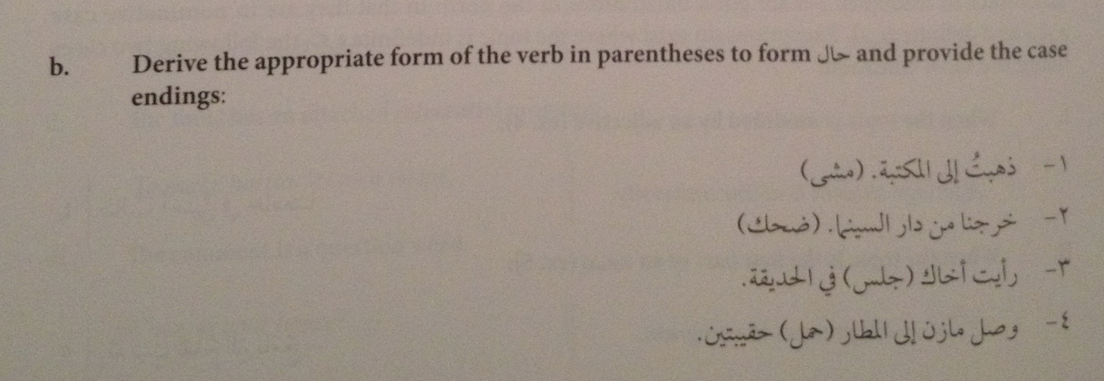
Uncategorized
MSA: Translation based on the grammatical rules form lesson one to lesson 7 from Al Kitaab Two
Translate the following sentences
which are based on the grammatical rules form lesson 1 to 7 from Al Kitaab Two.
which are based on the grammatical rules form lesson 1 to 7 from Al Kitaab Two.
1-I passed the street. I
stopped then continued again.
stopped then continued again.
2-I saw the man carrying the
books and smiling.
books and smiling.
3-He is from KSA, which is the biggest
country in terms of production of oil. I am older than him in terms of age.
country in terms of production of oil. I am older than him in terms of age.
4-He is very kind hearted and
well off.
well off.
5-He speaks the most eloquent
language.
language.
6-She is from Great Britain.
7-The English language is used
in a lot of regions in the world.
in a lot of regions in the world.
8-These are enough seats.
9-I got to know a lot of people
in the USA and they were very nice with me.
in the USA and they were very nice with me.
10-Don’t betray your country.
11-Say that you love me.
12-Sarah, stop.
13-John, put the ball on the
table. Sleep. Respect yourself.
table. Sleep. Respect yourself.
14-Let’s go to the cinema.
15-Ahmed and Mohamed, please read this
letter.
letter.
16-The glass was broken.
17-The homework was written
yesterday.
yesterday.
18-The man was killed last week.
19-Mona was born in Alexandria.
20-The movie was produced in
1990.
21- I like this newspaper Al Ahram a lot.
22- This christmas is very different because I will spend it with my friends in Egypt.
1990.
21- I like this newspaper Al Ahram a lot.
22- This christmas is very different because I will spend it with my friends in Egypt.
Uncategorized
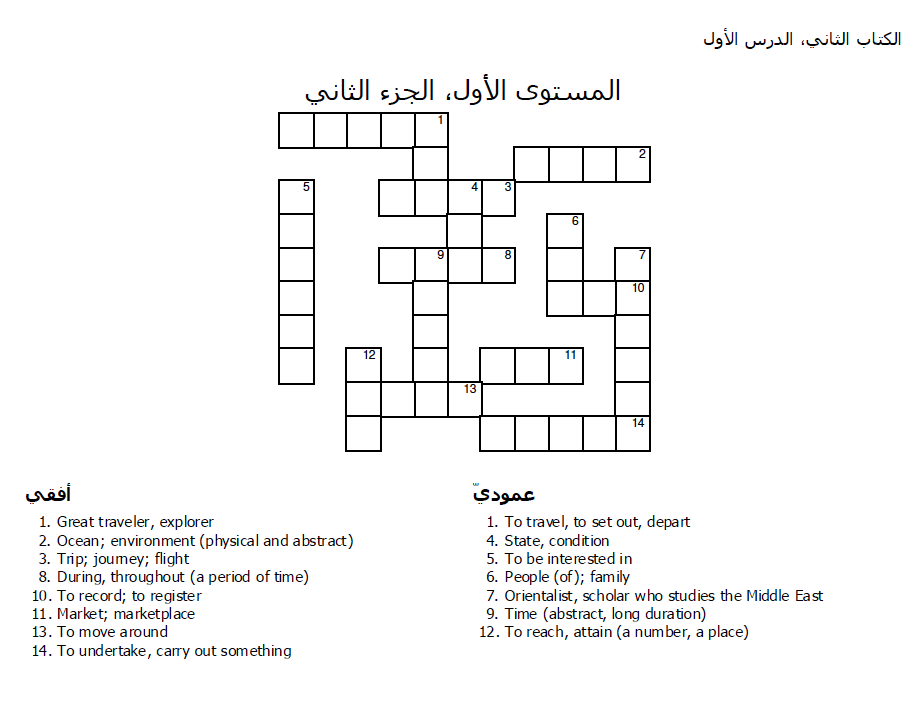
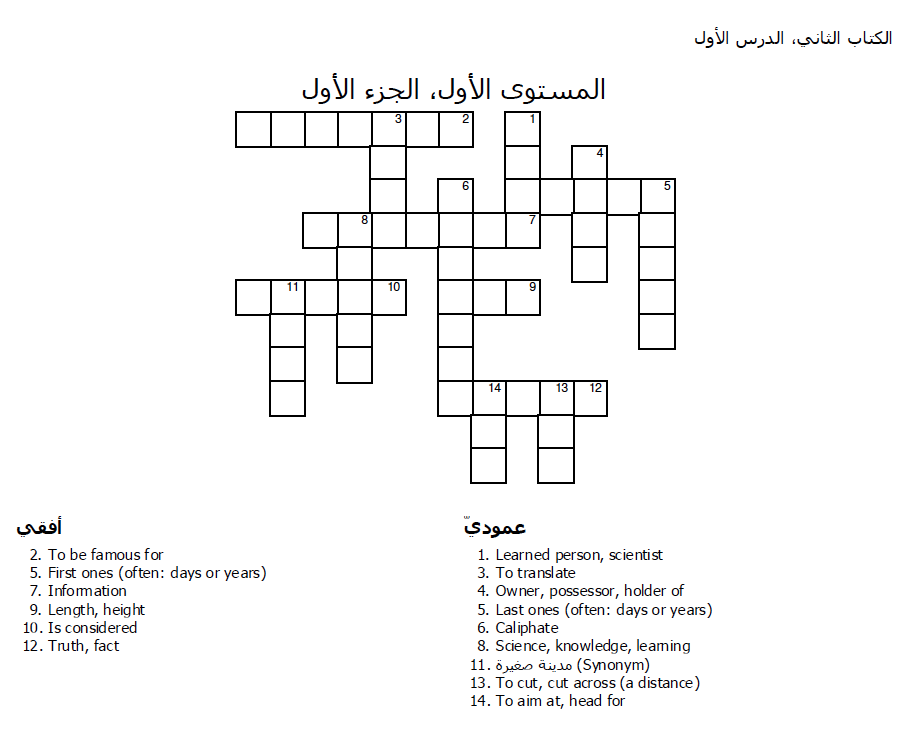
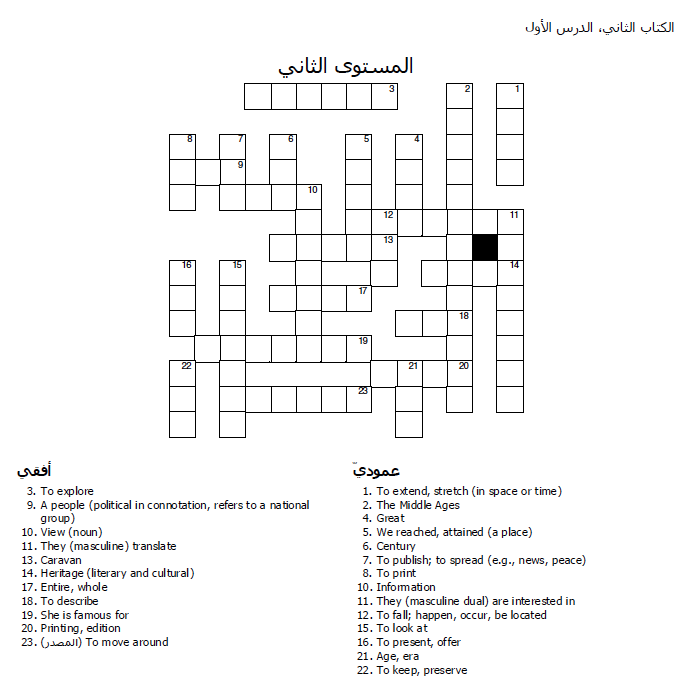
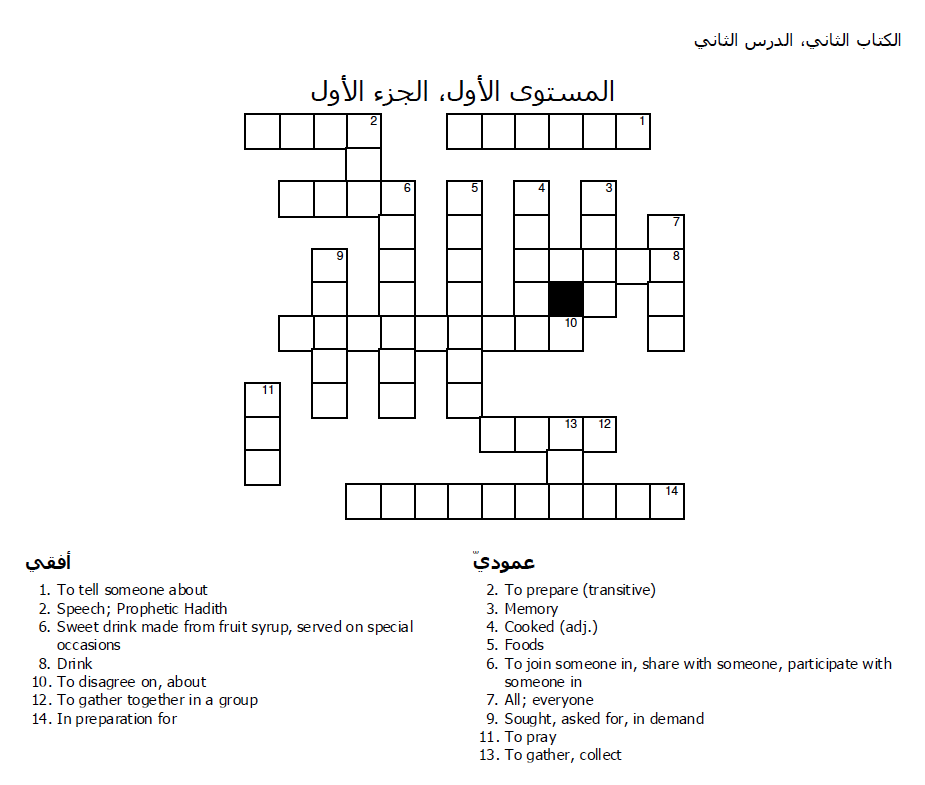
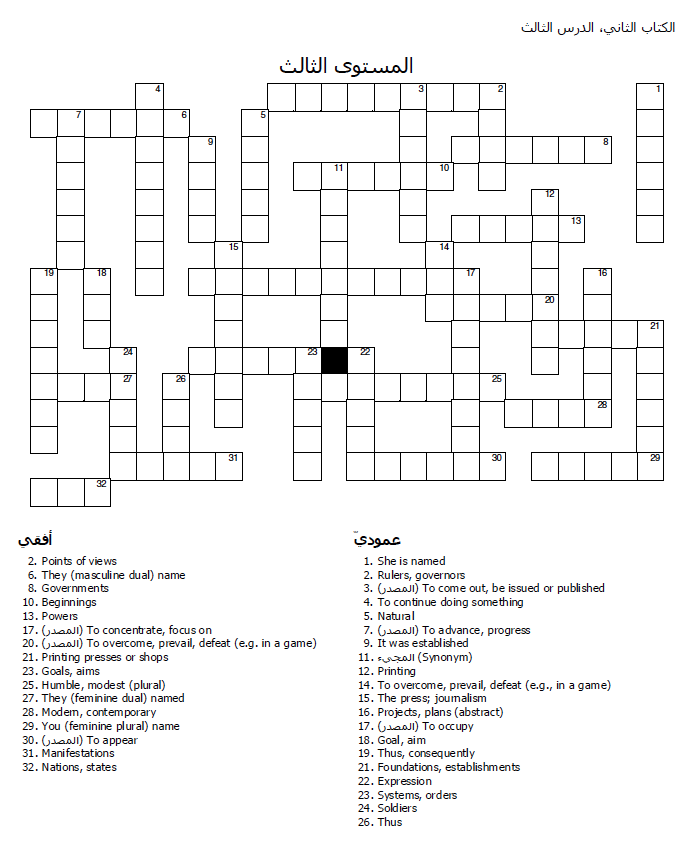
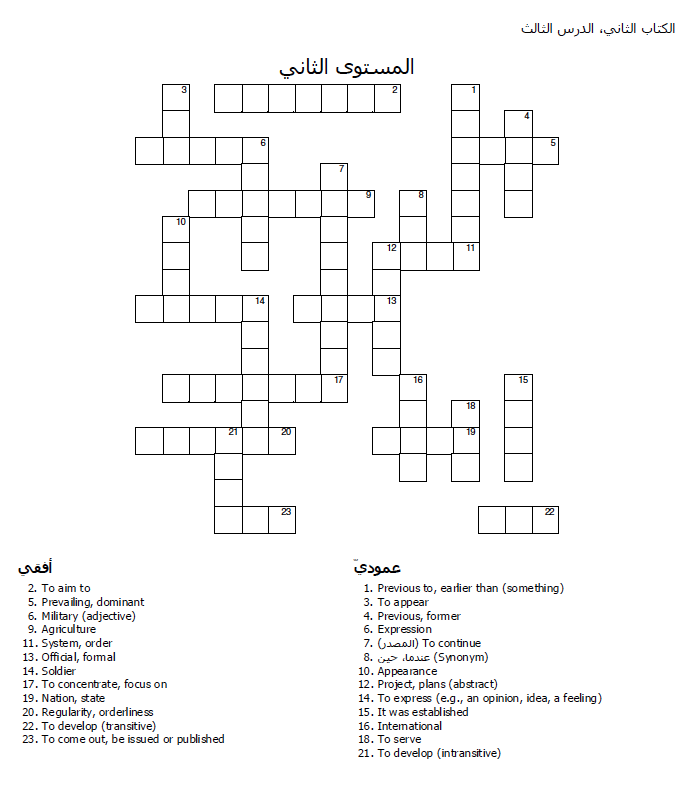
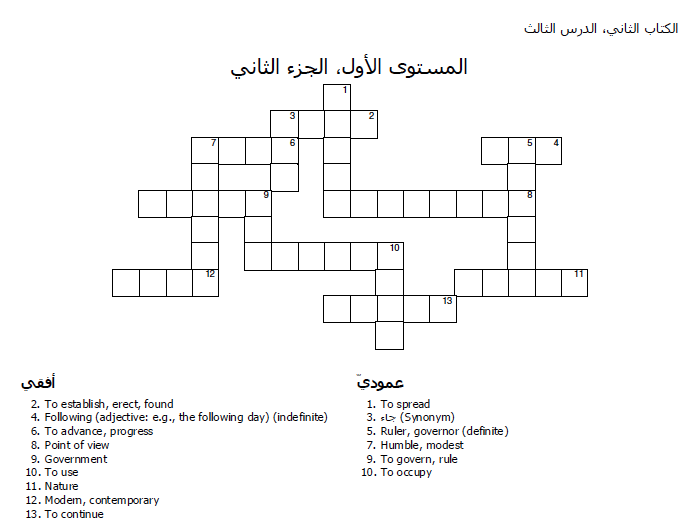
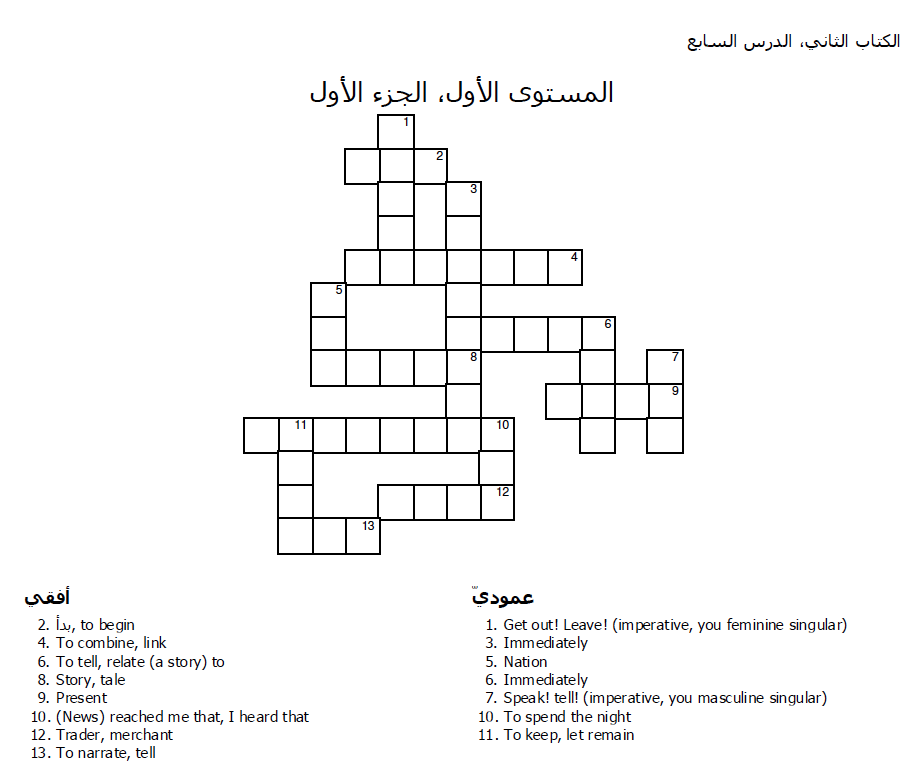
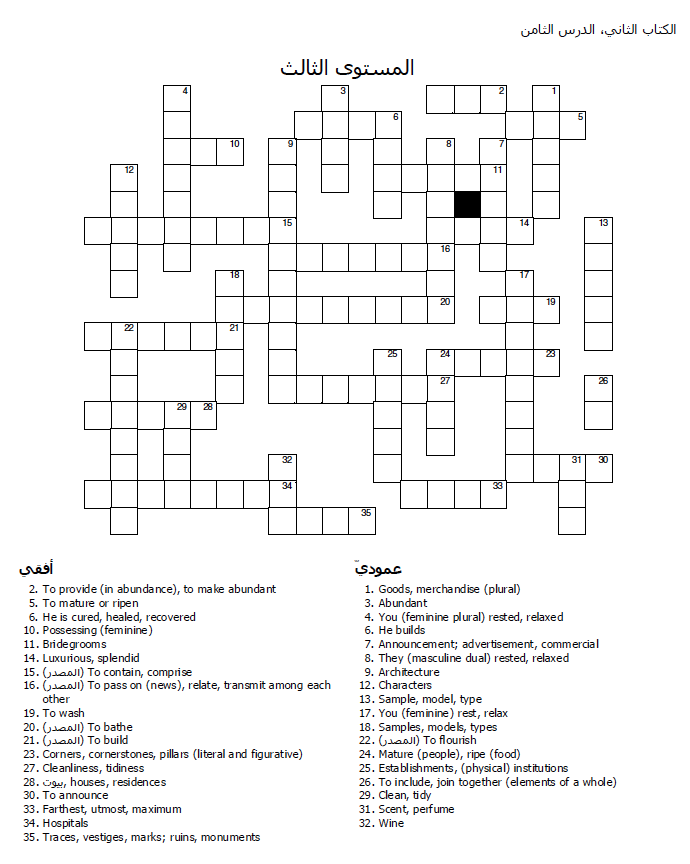
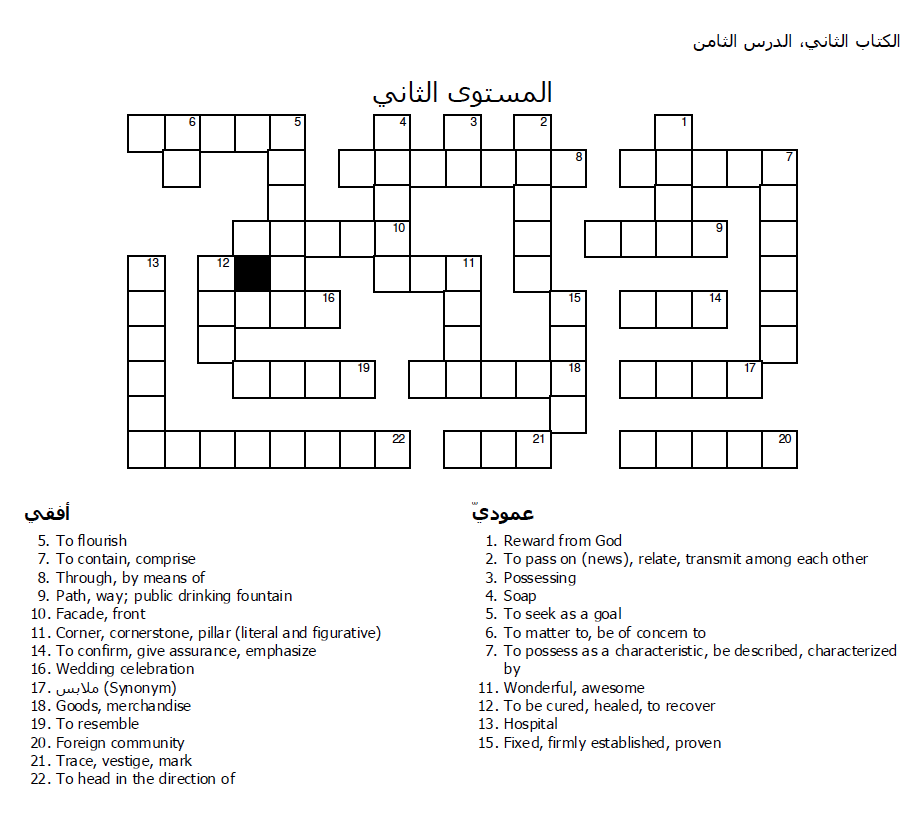
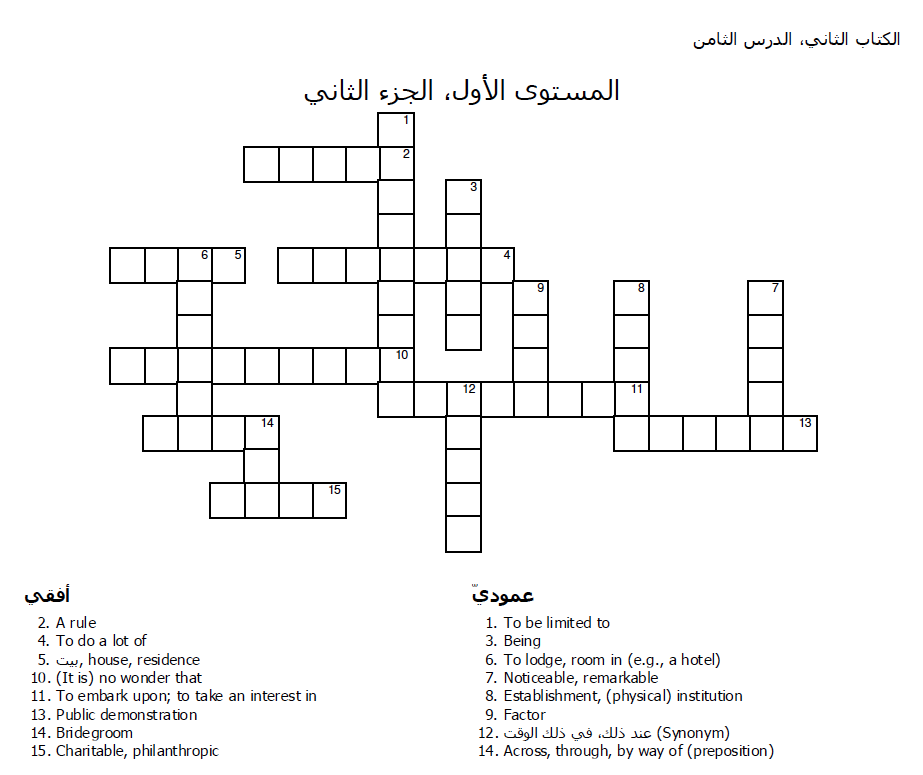
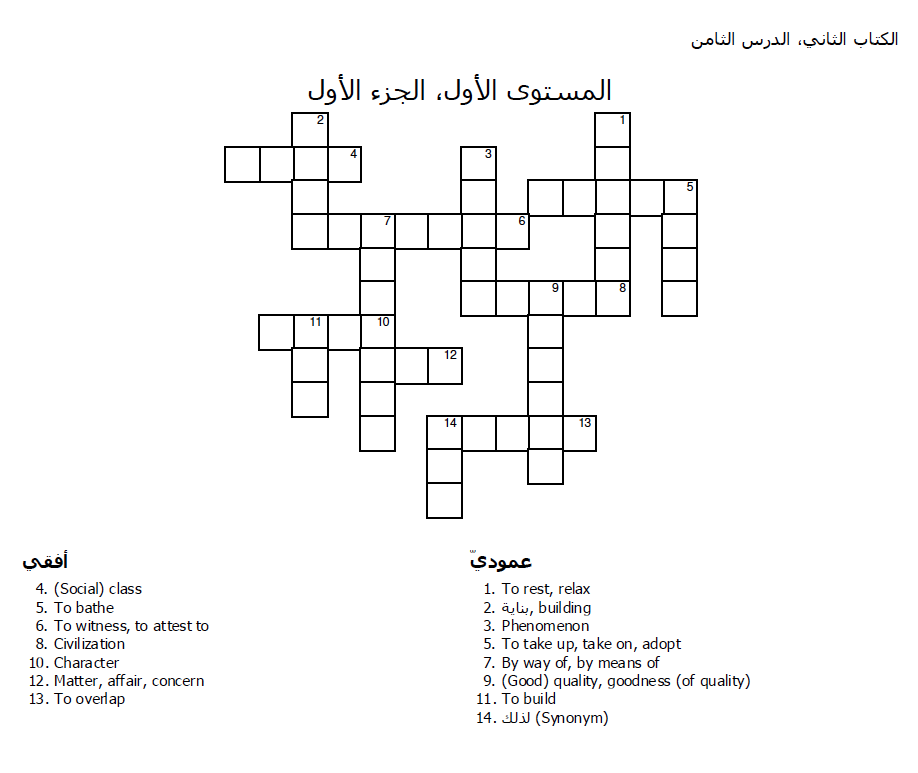
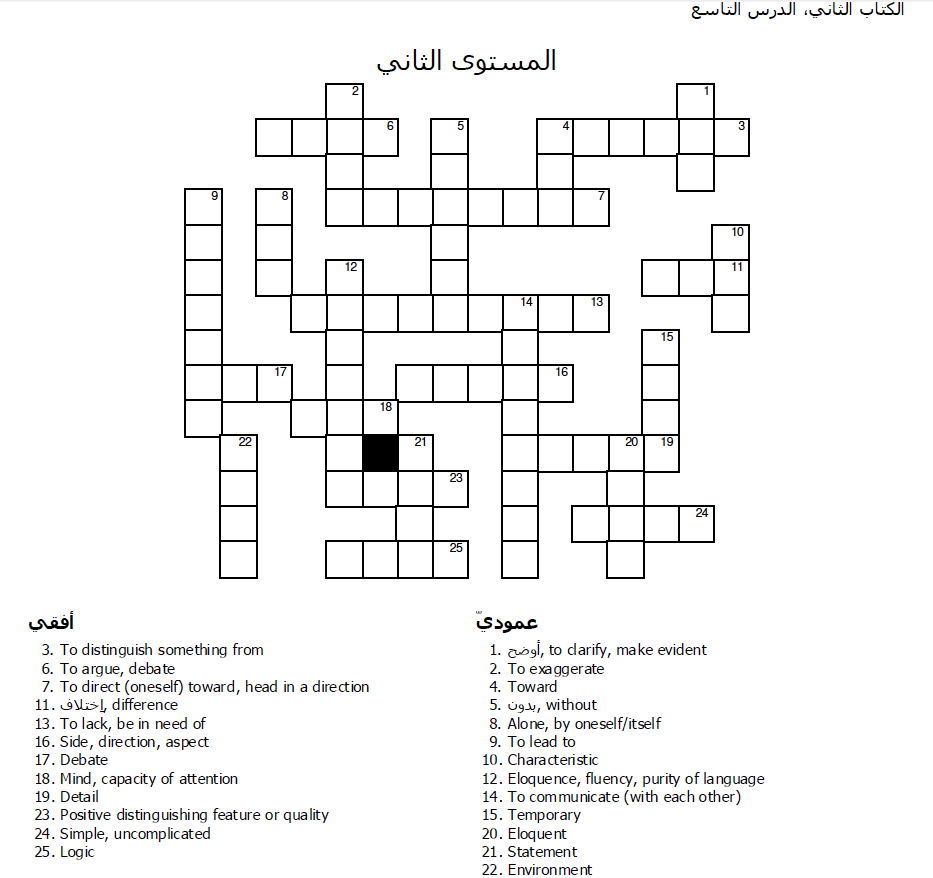
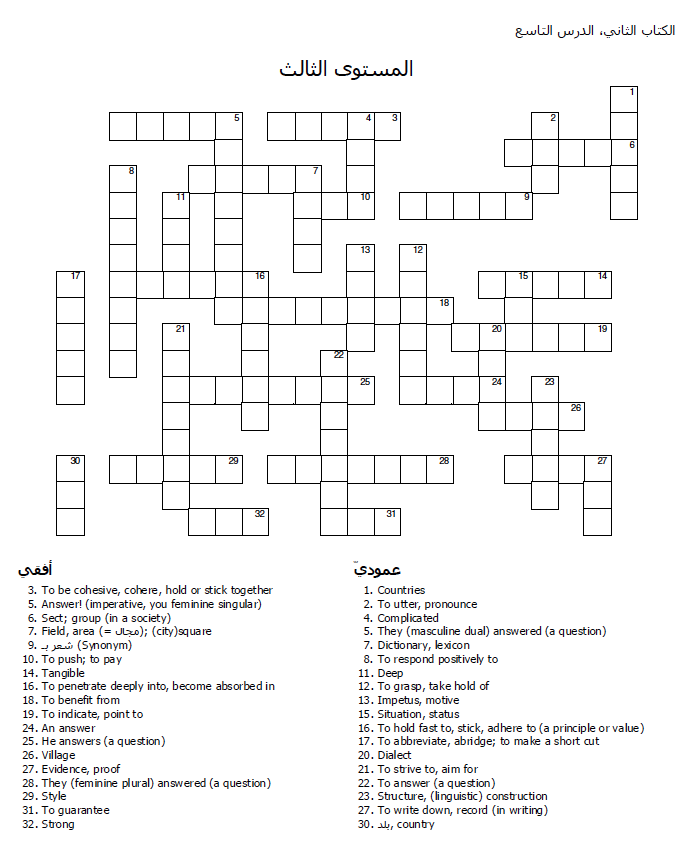
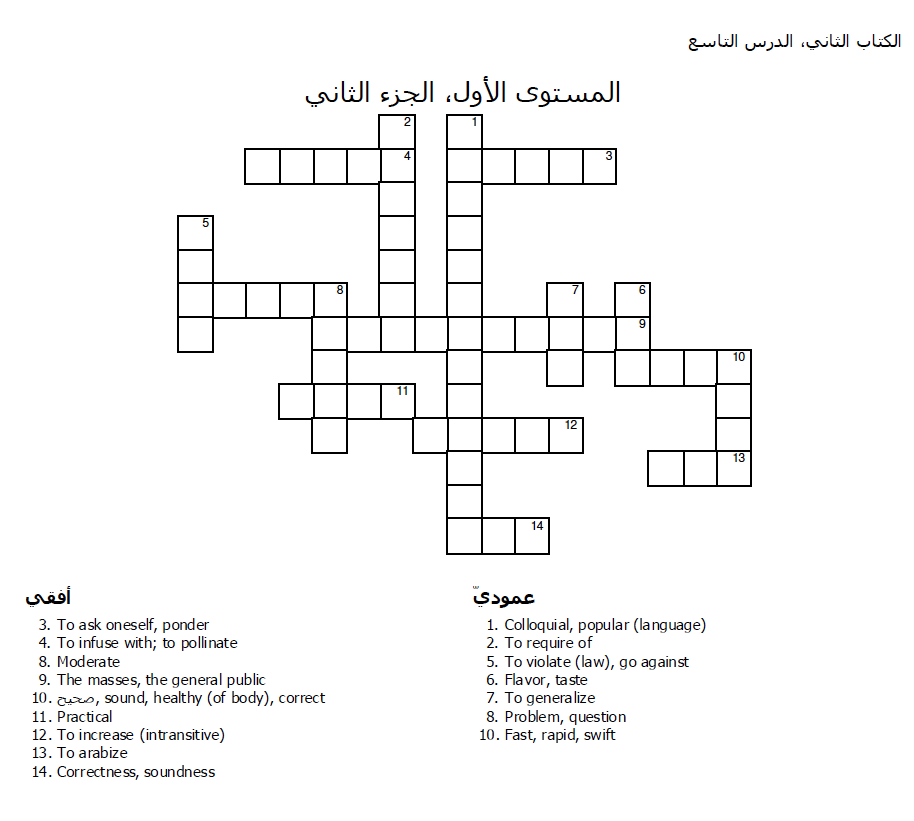
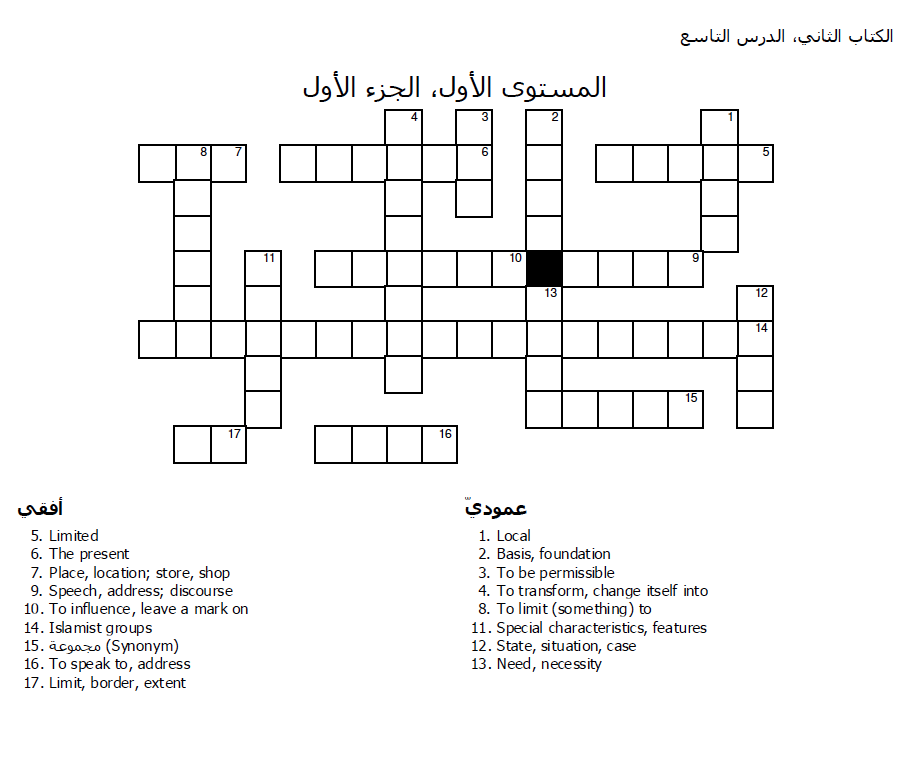
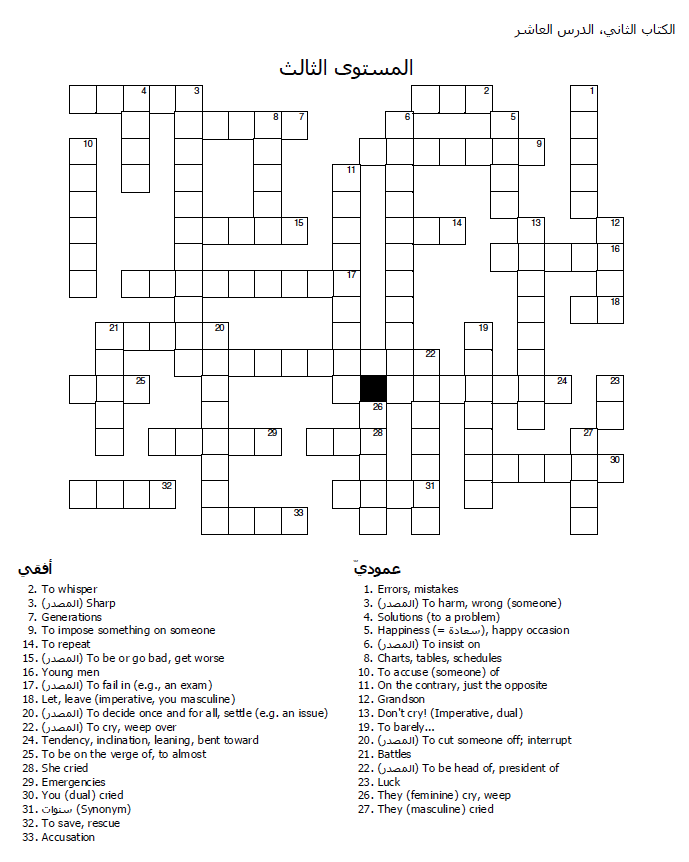
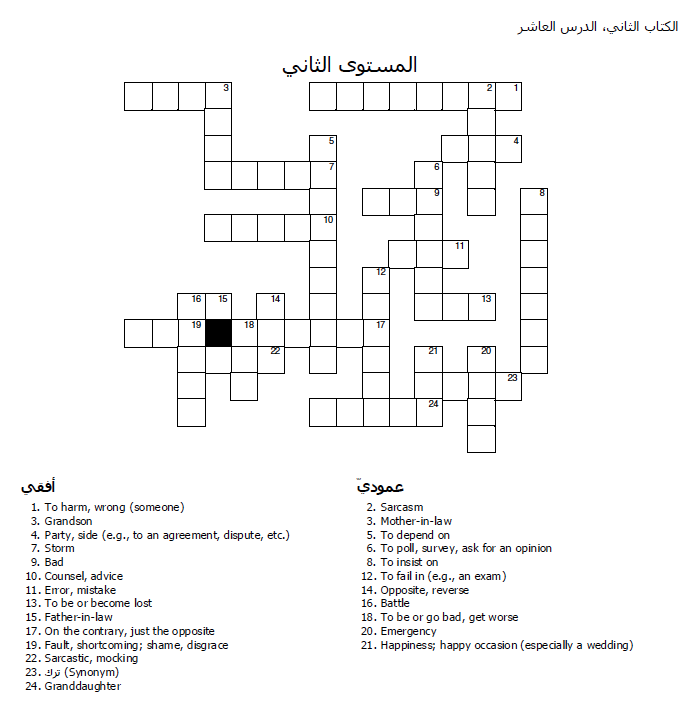
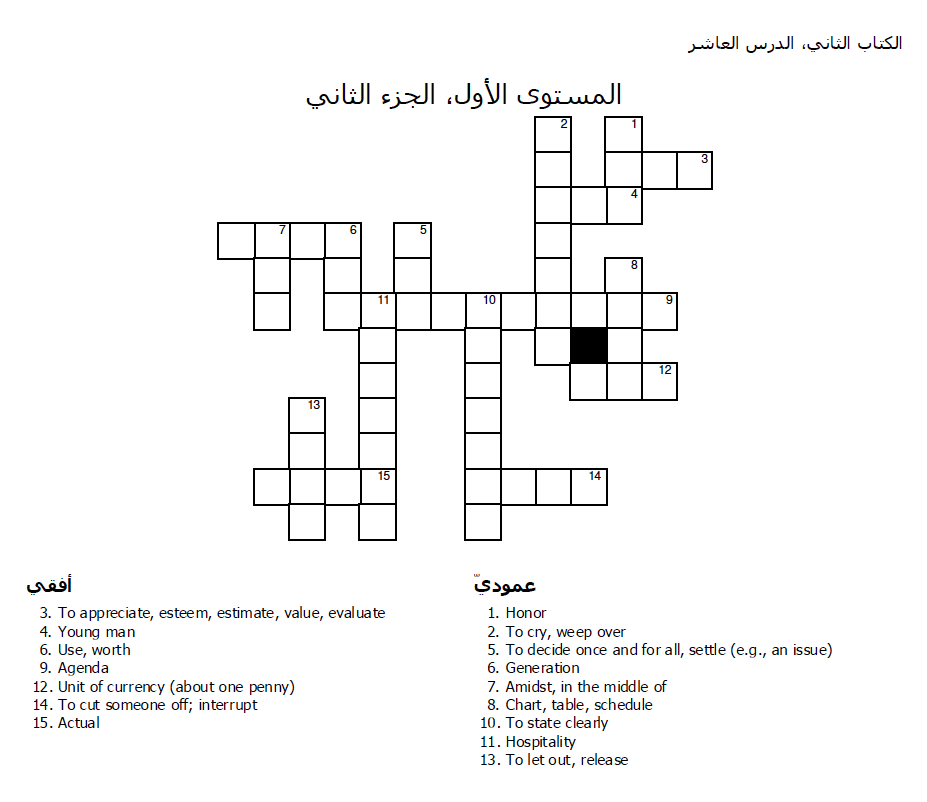
Crossword Puzzles: AlKitaab Two
الدرس الأول
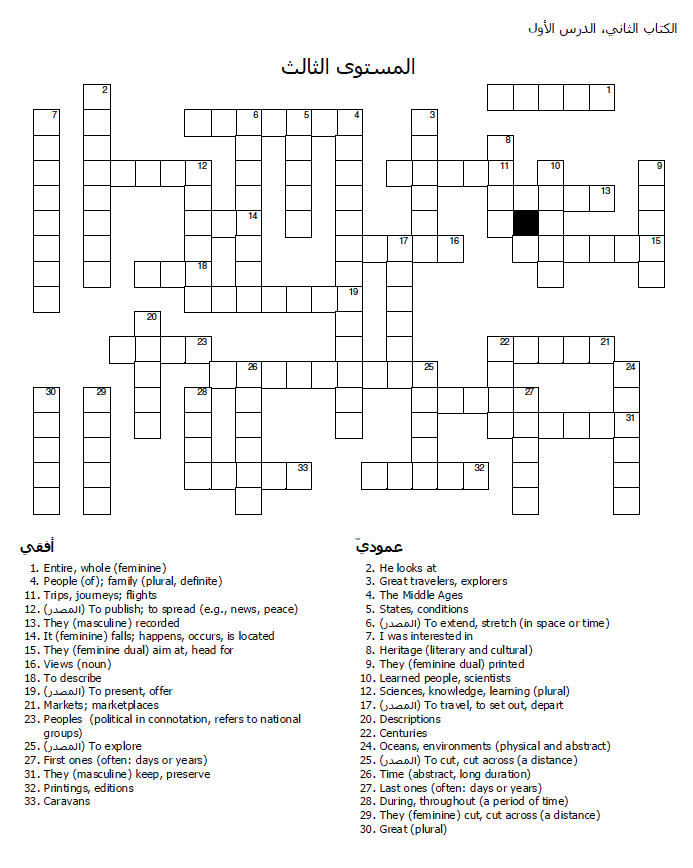
———————————————————————
الدرس الثاني
الدرس الثاني
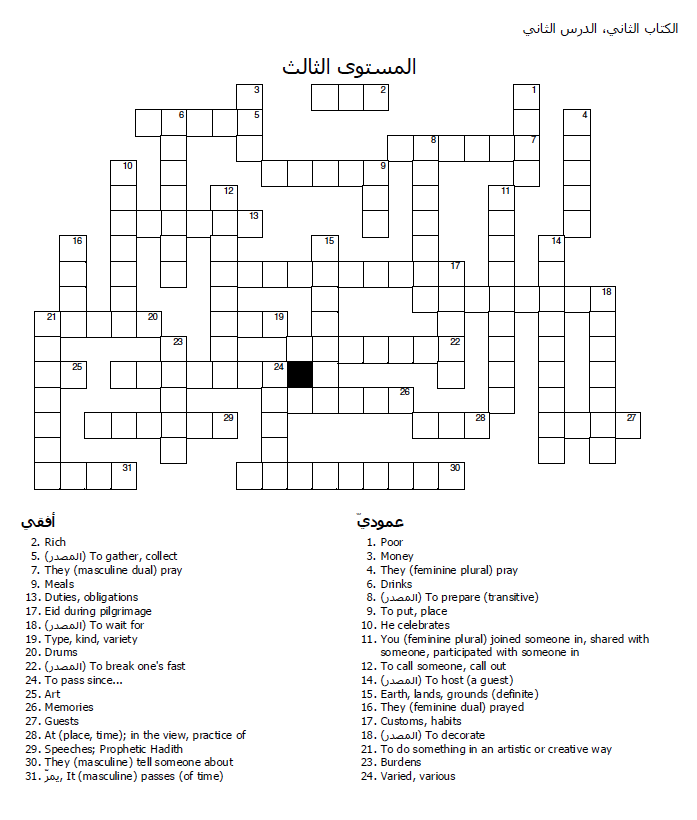
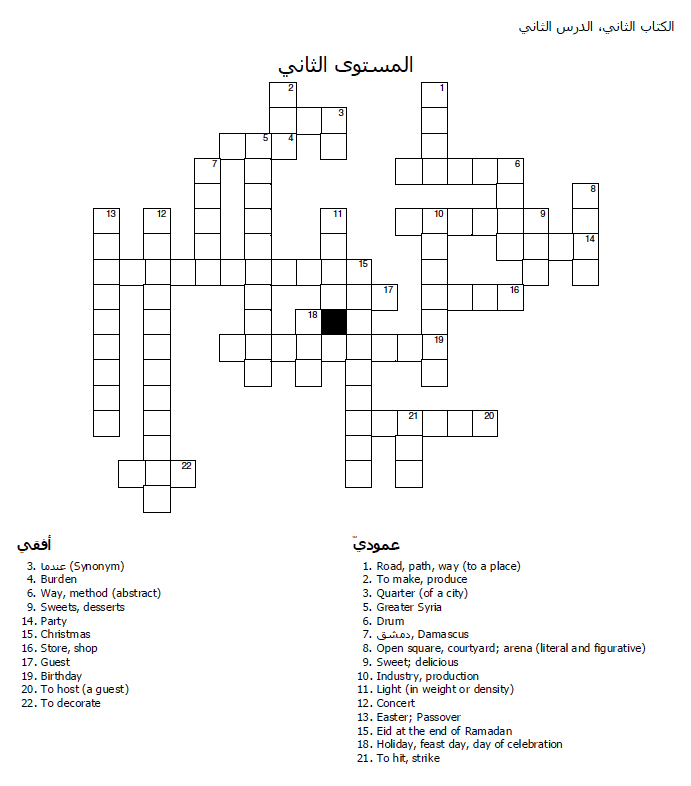
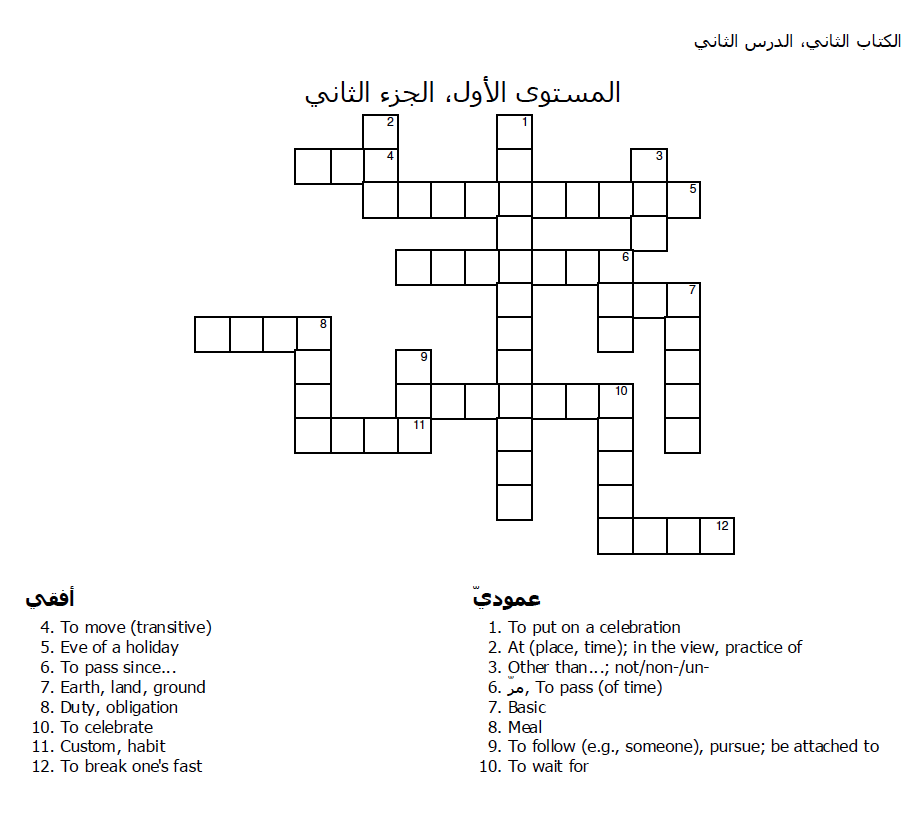
—————————————————
الدرس الثالث
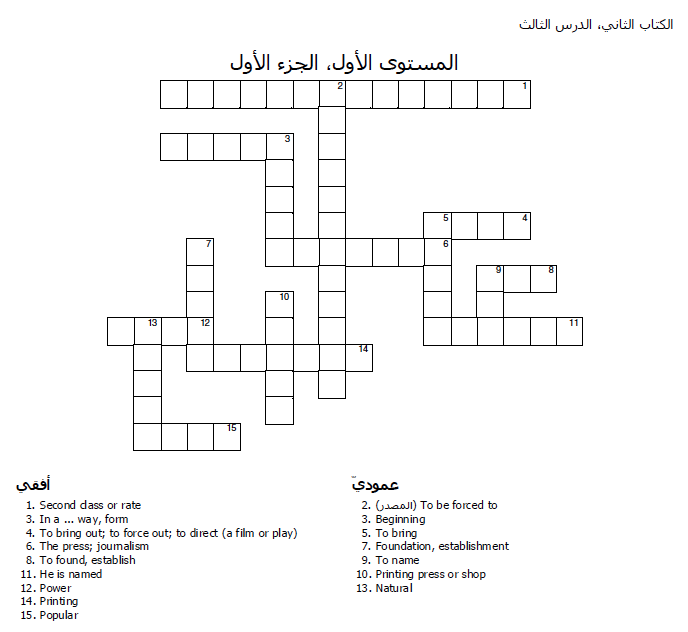
———————————————————-
الدرس الرابع
الدرس الرابع
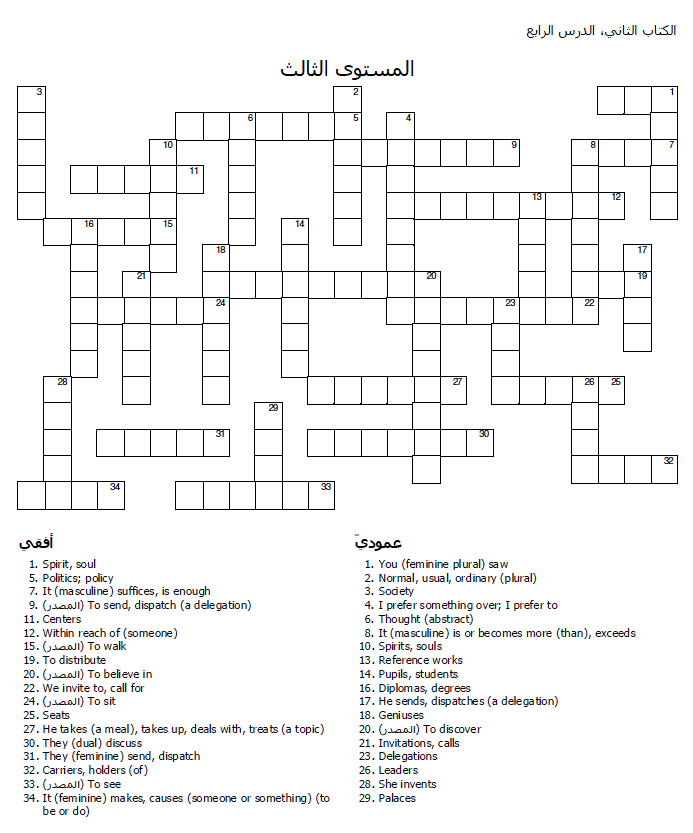
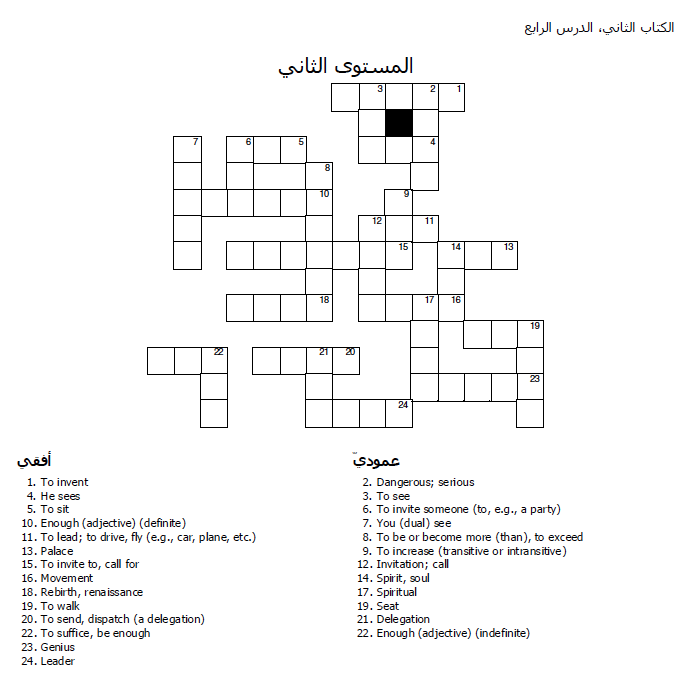
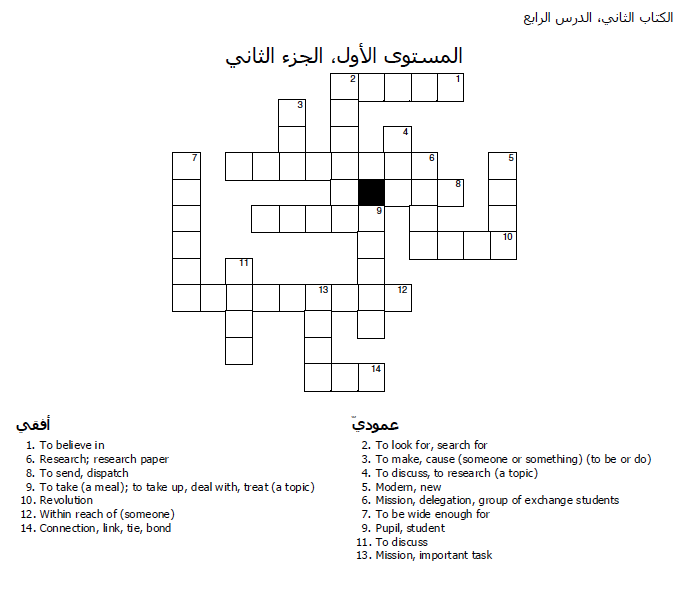
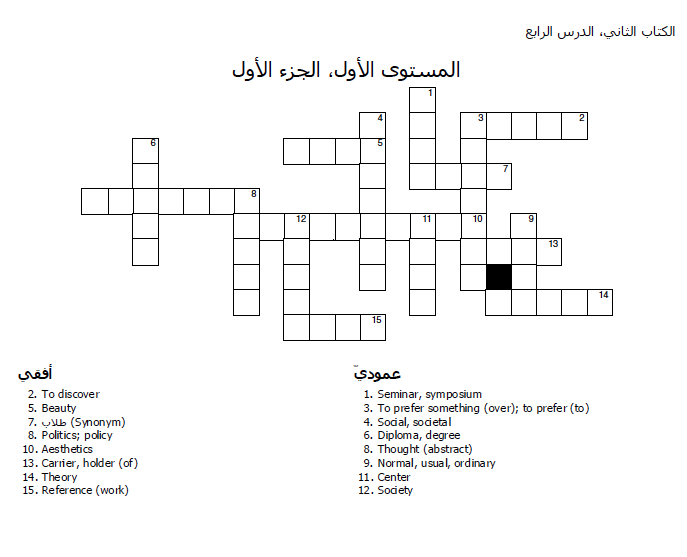
———————————————————————-
الدرس الخامس
الدرس الخامس
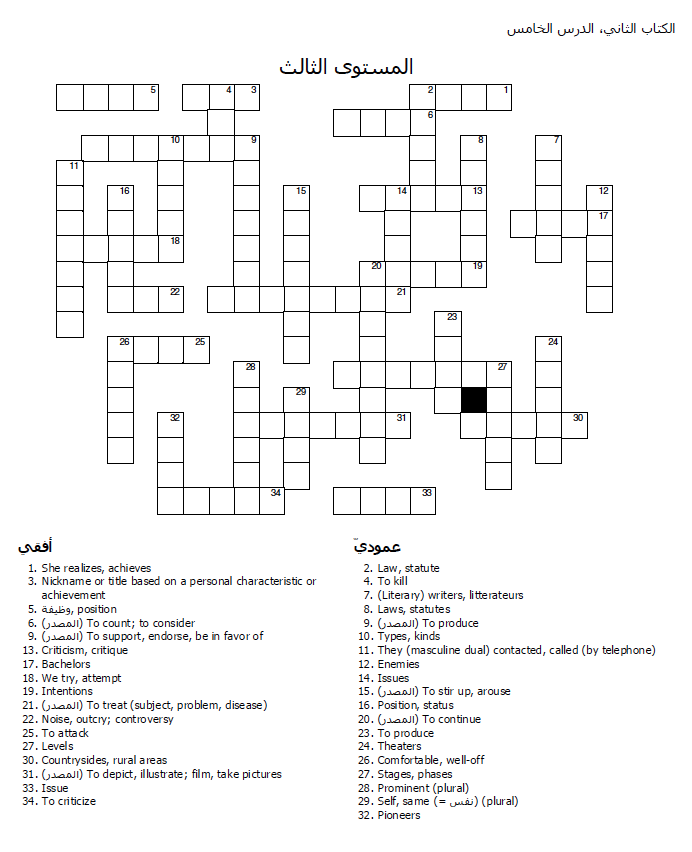
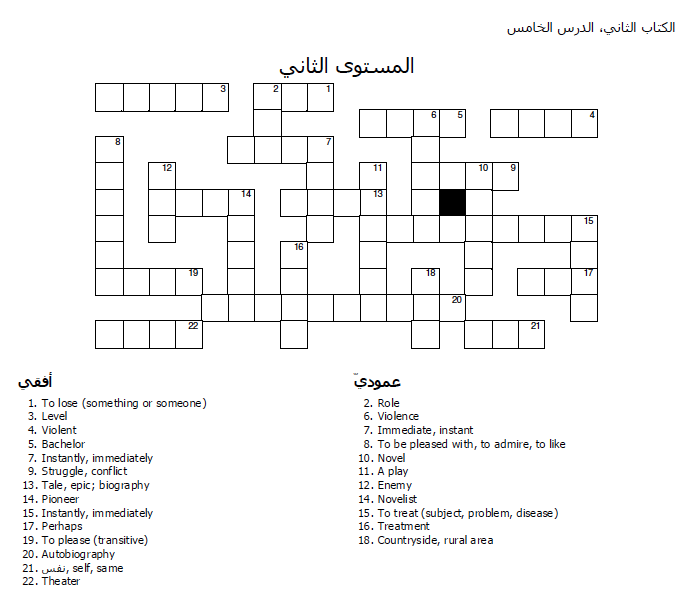
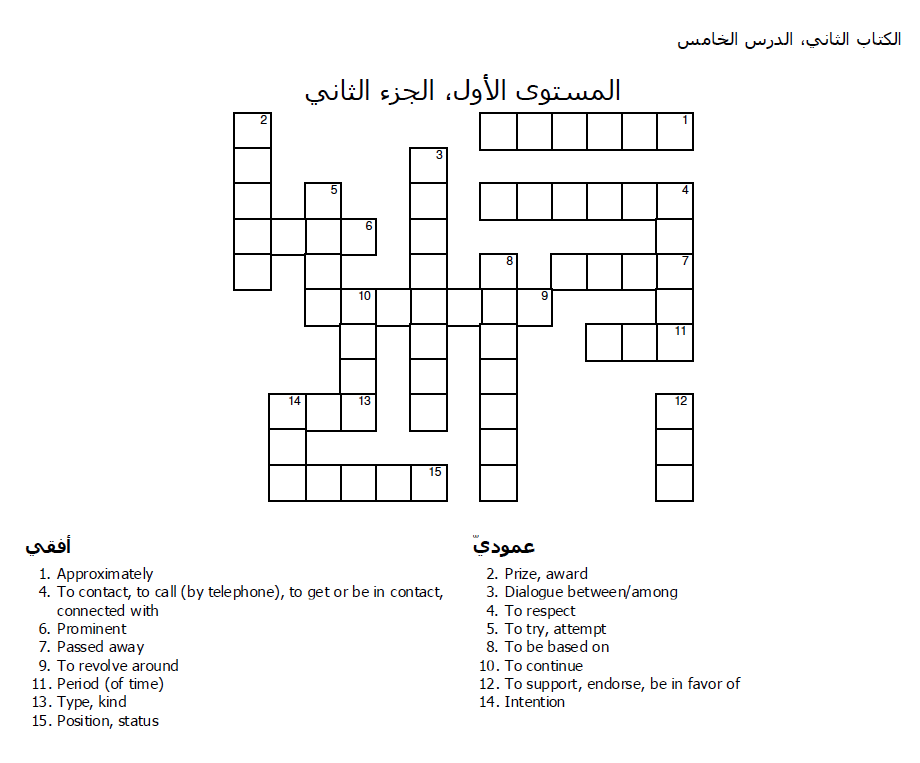
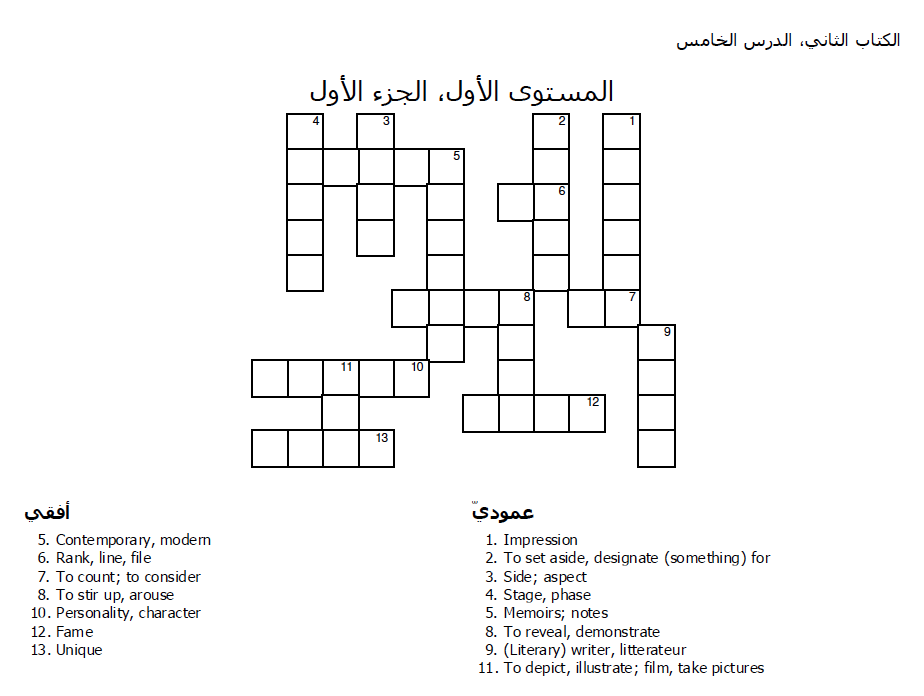
—————————————————————
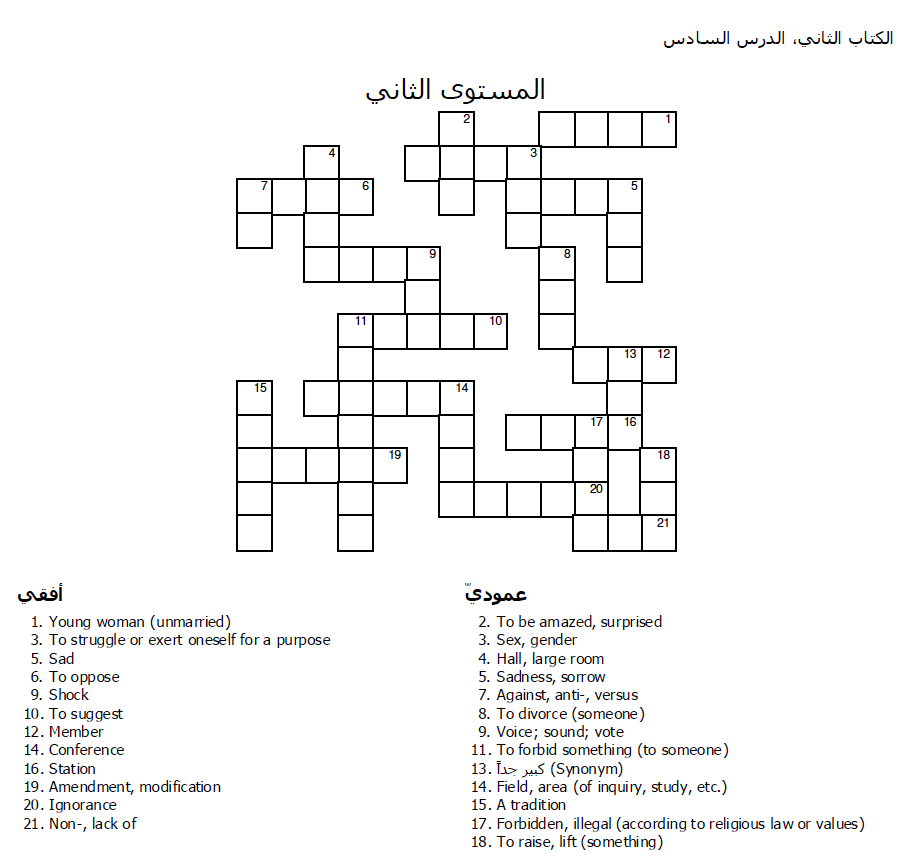
الدرس السادس
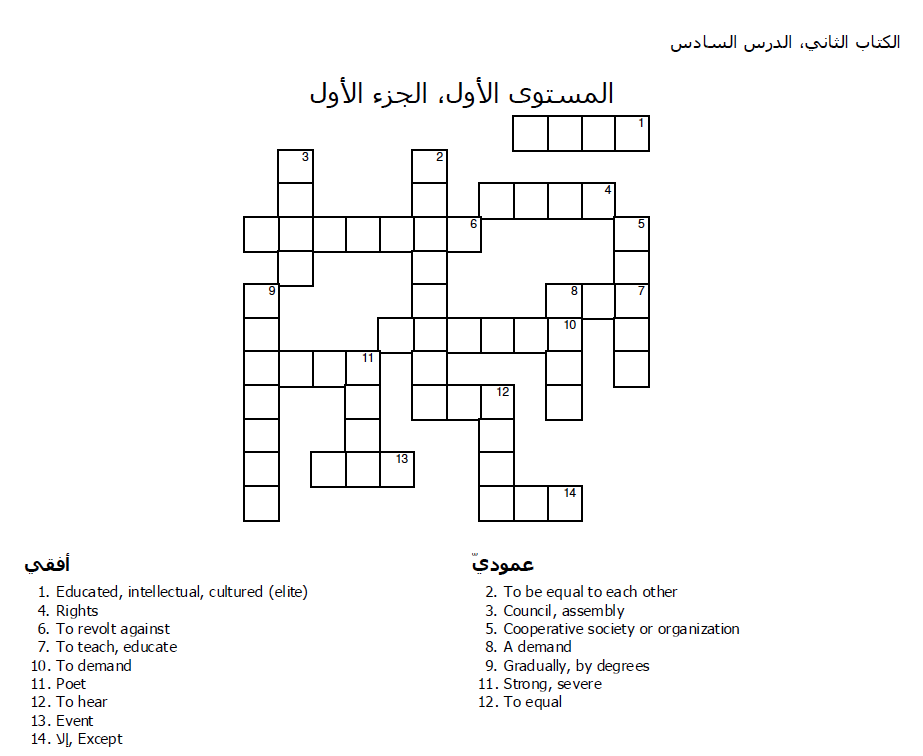
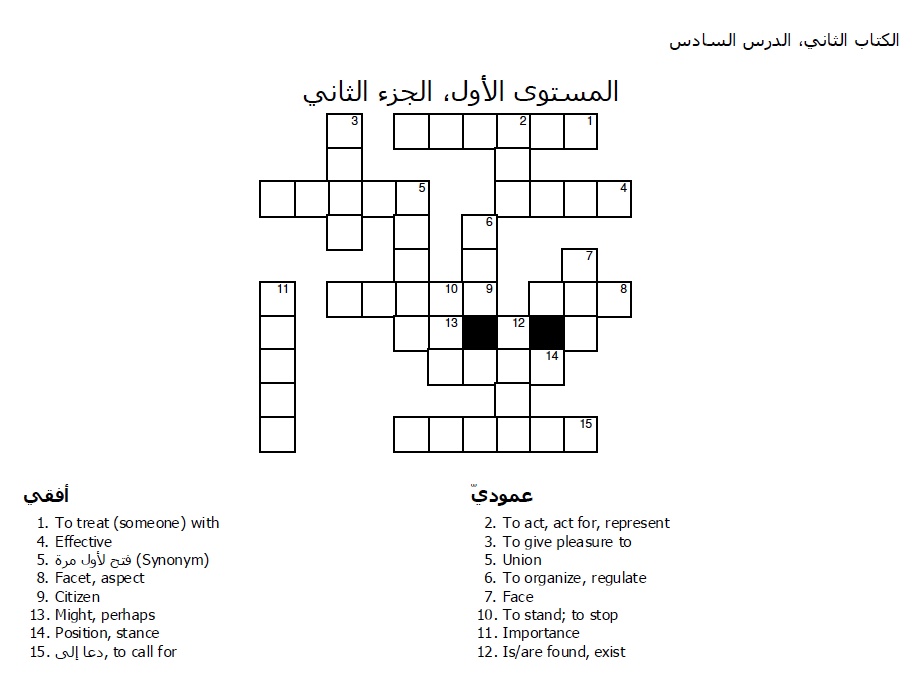
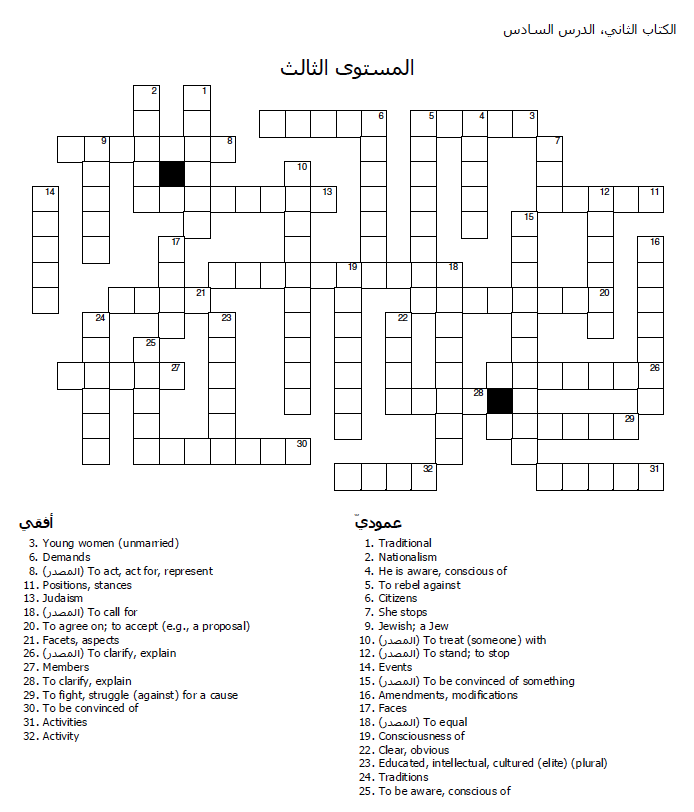
——————————————————–
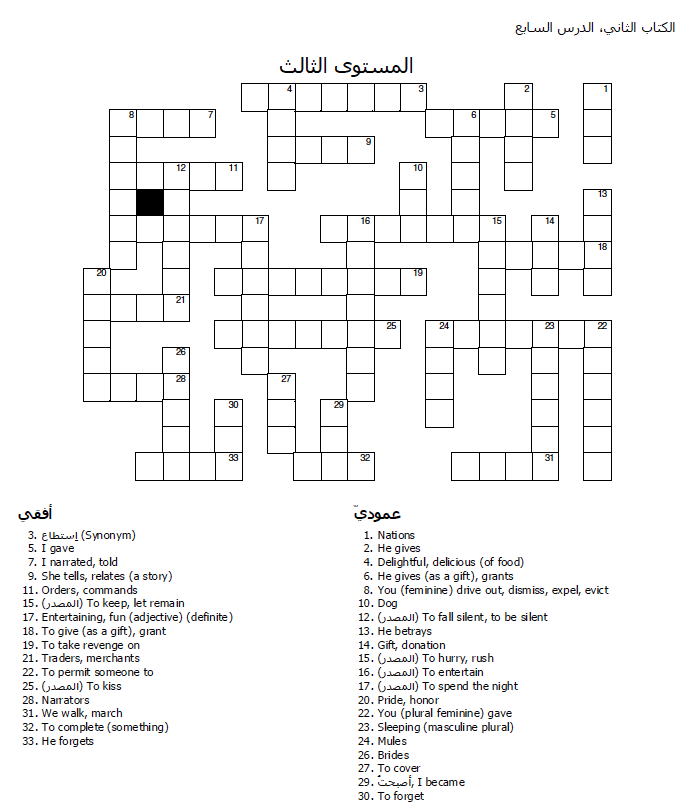
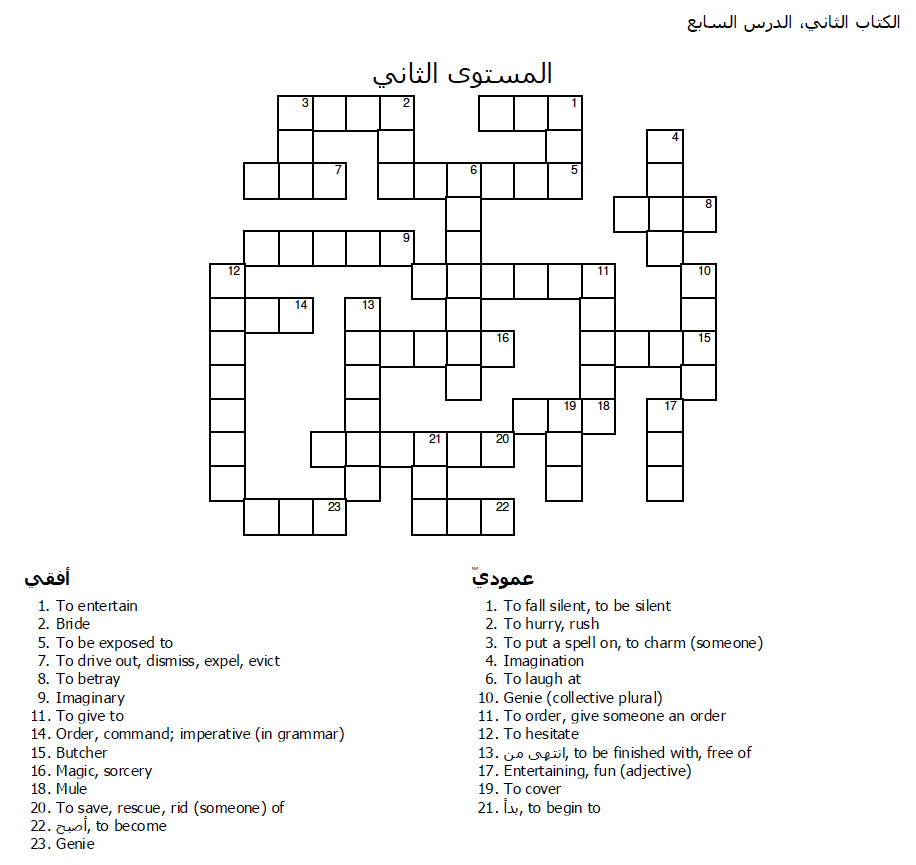
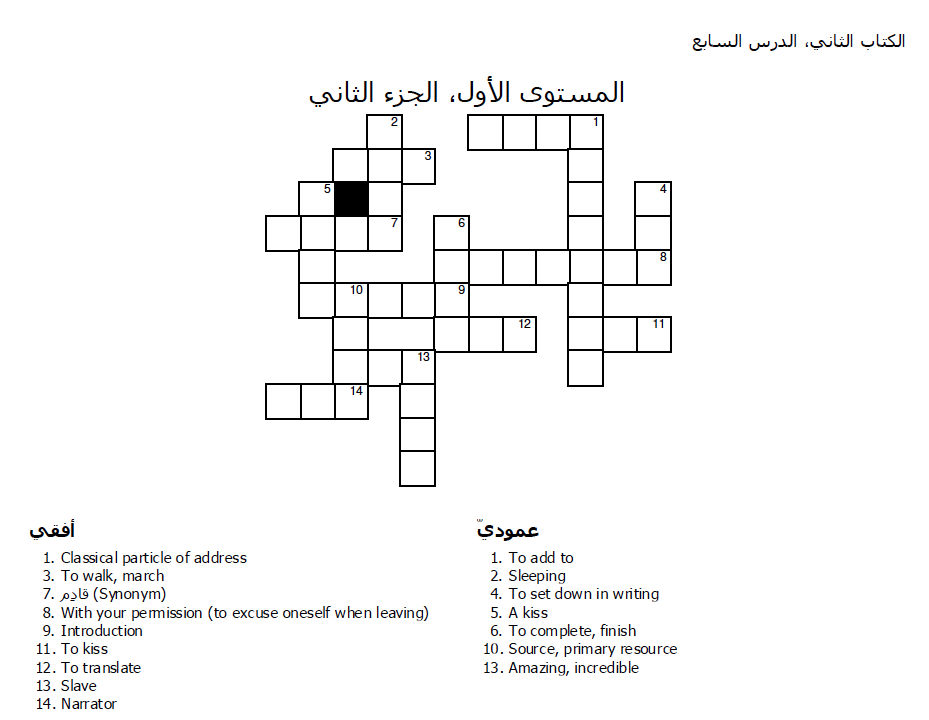
الدرس السابع
—————————————————
الدرس الثامن
———————————————————
الدرس التاسع
———————————————————-
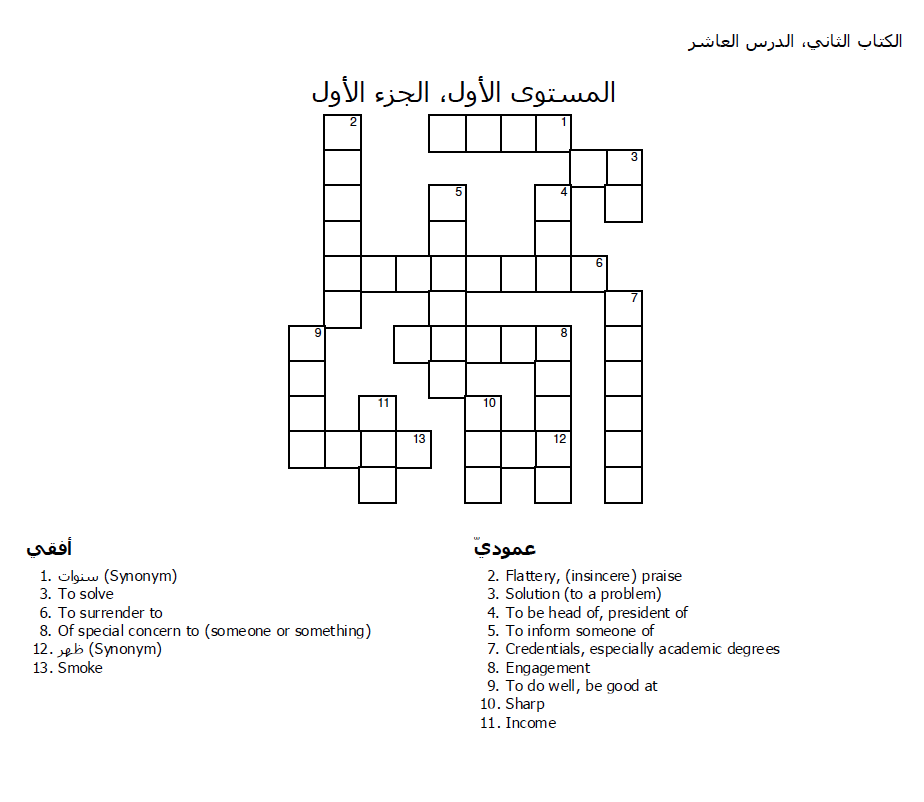
الدرس العاشر
Uncategorized
Al Kitaab2 – Lesson 6
Al Kitaab
الكتاب الثاني – الدرس السادس
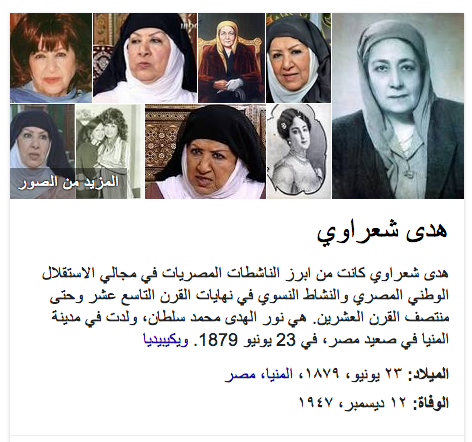
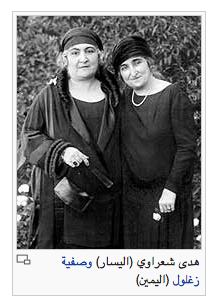
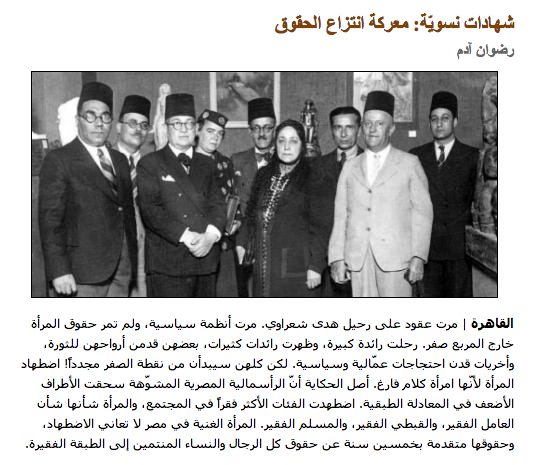
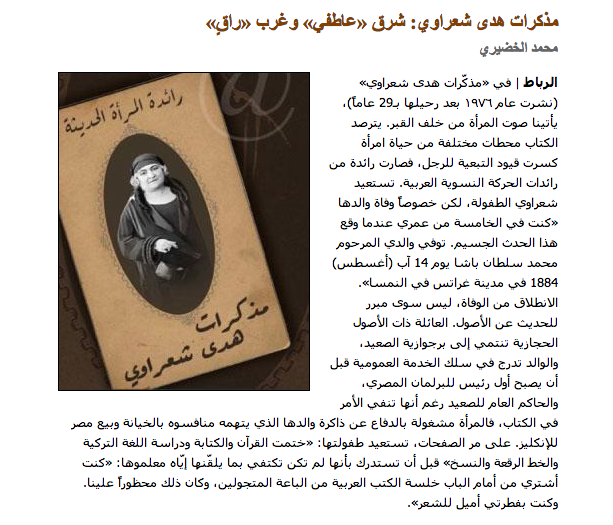
من رائدات الحركة النسائية العربية
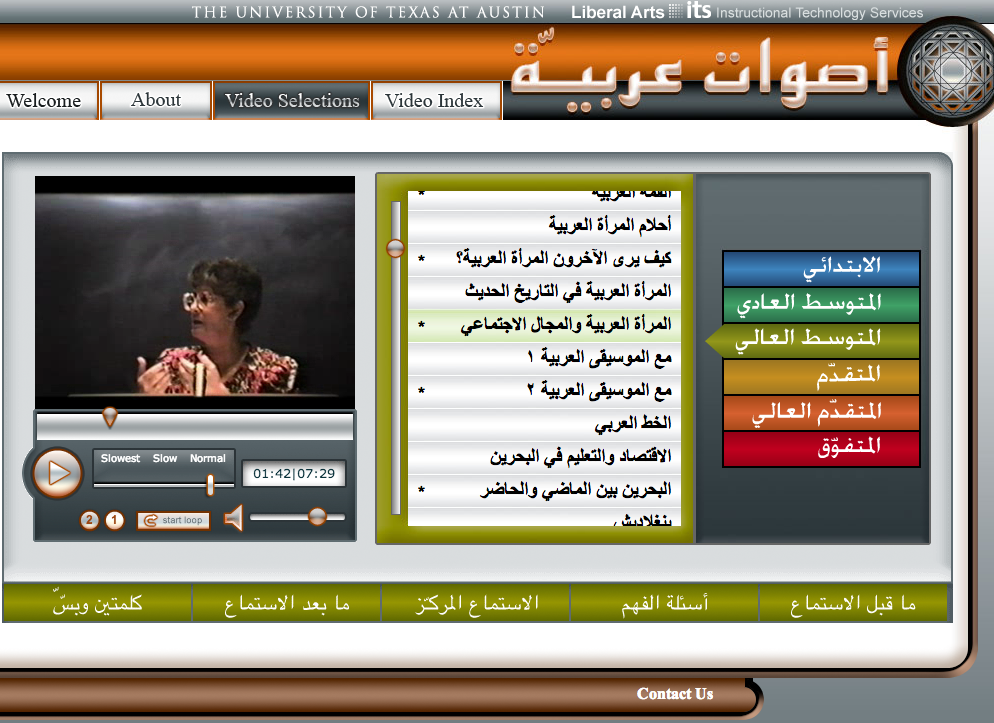
نص استماع من أصوات عربية
الدكتورة عايدة بامية
المرأة العربية والمجال الاجتماعي
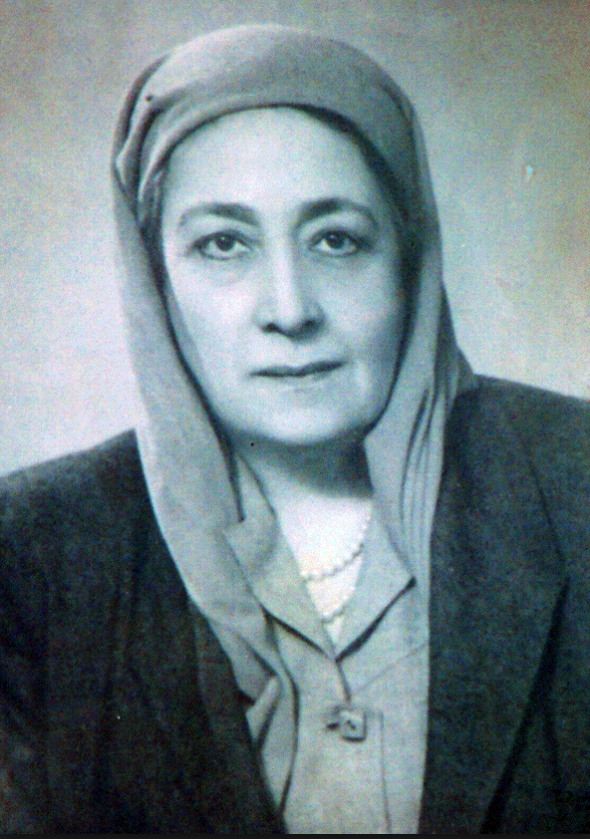
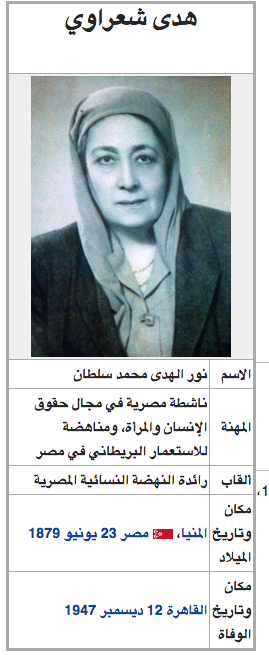
هدي شعراوي
========================================
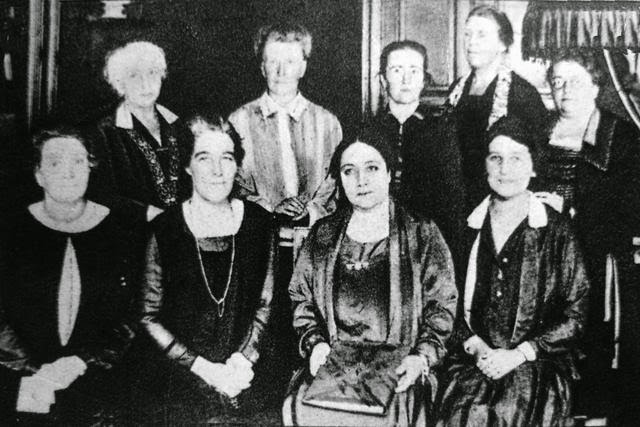
هدى شعراوي في مؤتمر برلين عام 1928م هذا المؤتمر حضرته بالنيابة عن النساء المصريات السيدة هدى شعراوي رئيسة الاتحاد النسائي المصري، ونراها في الصورة الثانية
==============================================
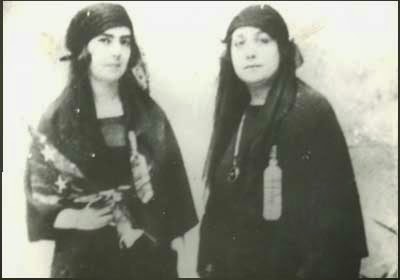
هدى شعراوي وسيزا نبرواي
=====================================
================================
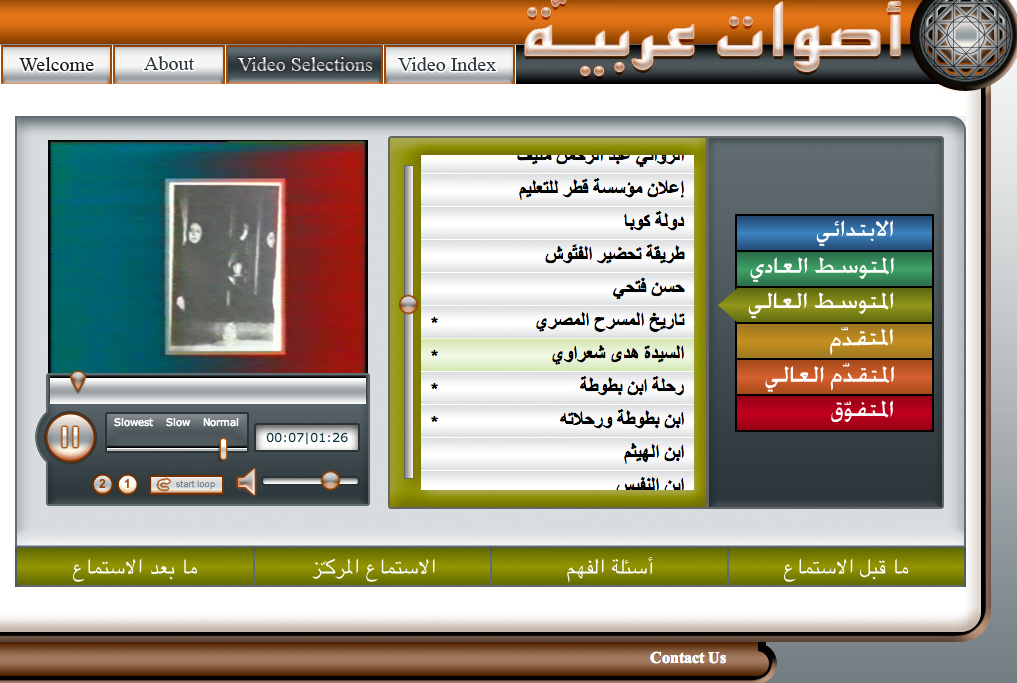
نص استماع من أصوات عربية
السيدة هدى شعراوي
http://www.laits.utexas.edu/aswaat/video_s.php#/2/hoda_sharawy/
=========================================
========================================
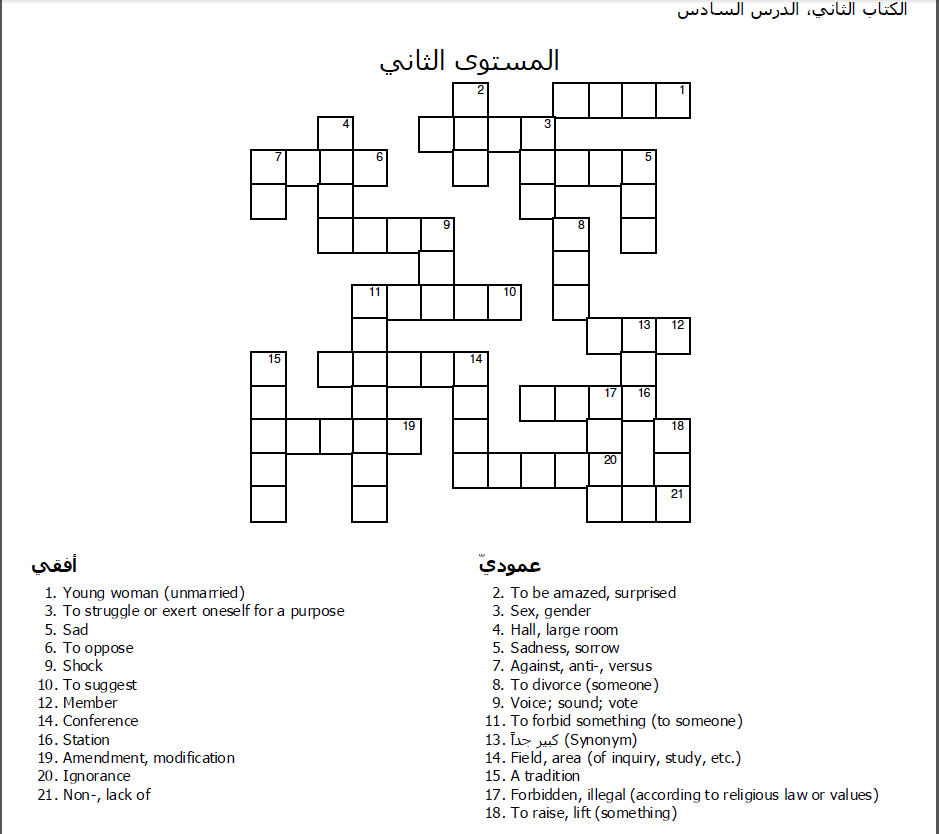
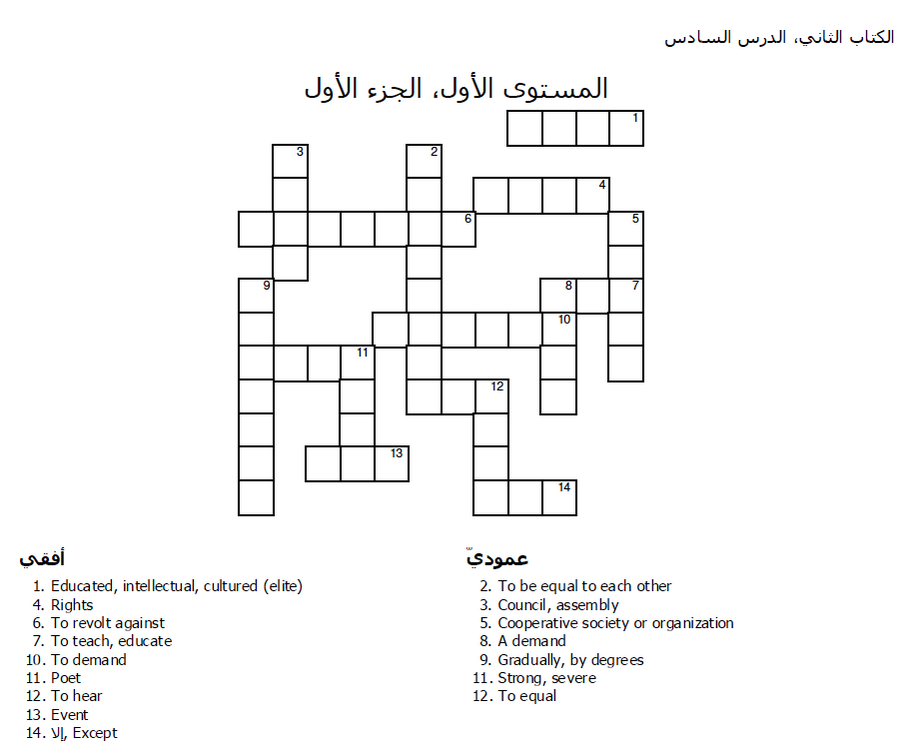
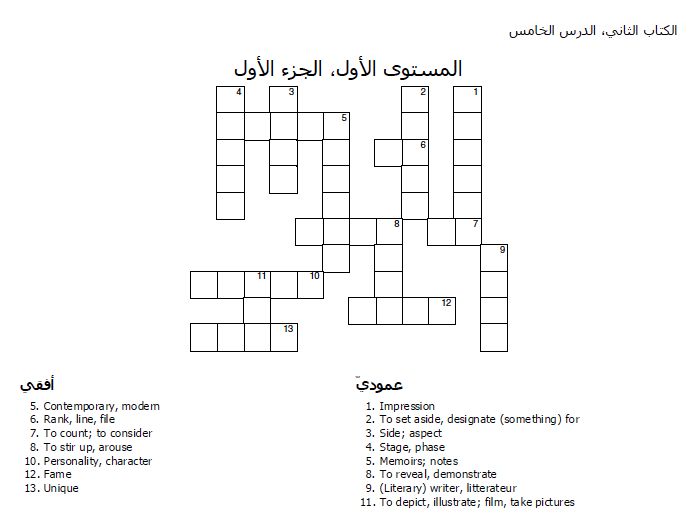
الكلمات المتقاطعة
===========
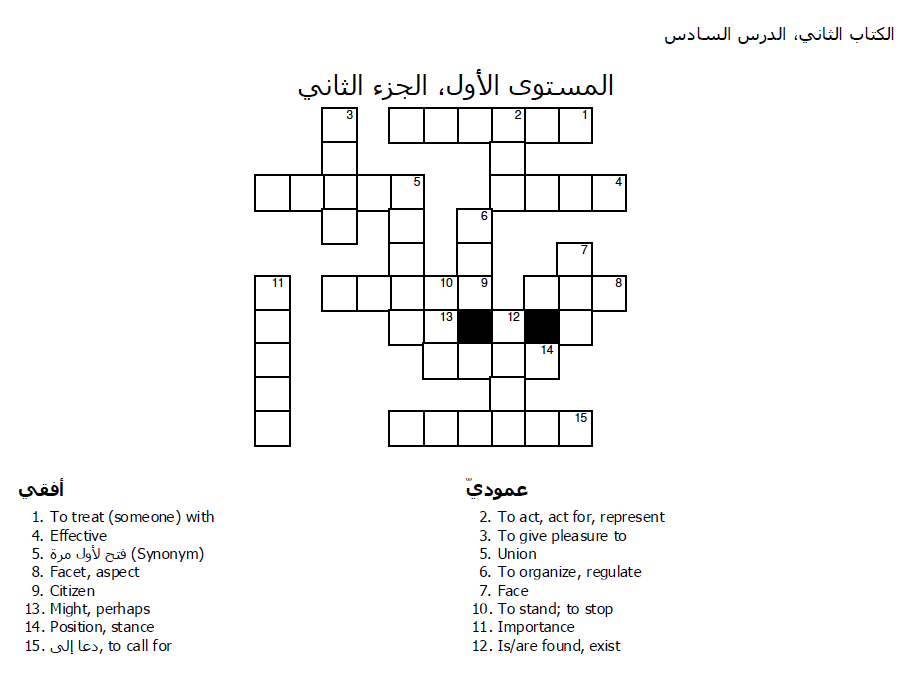
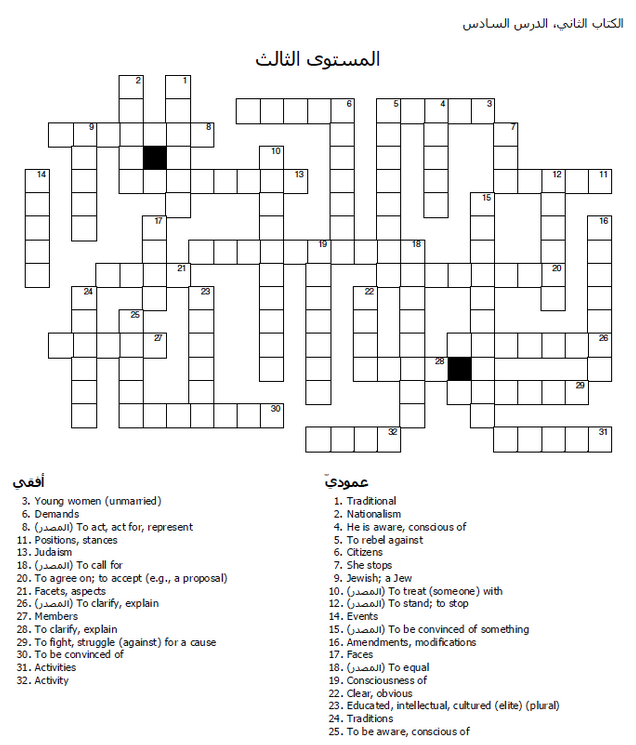
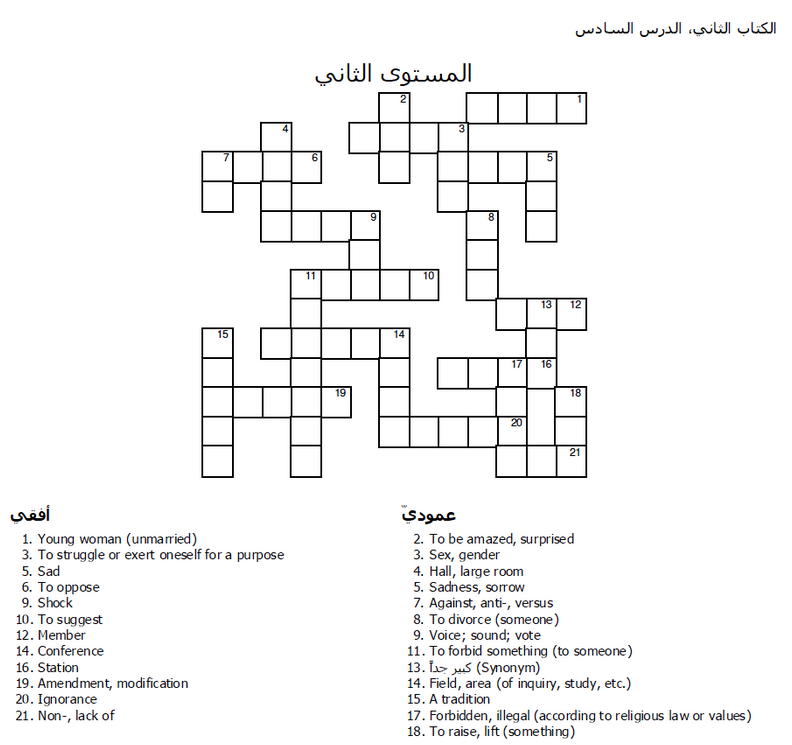
====================================
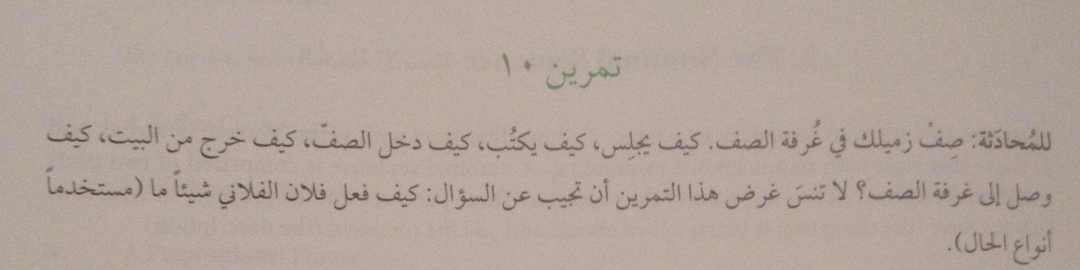
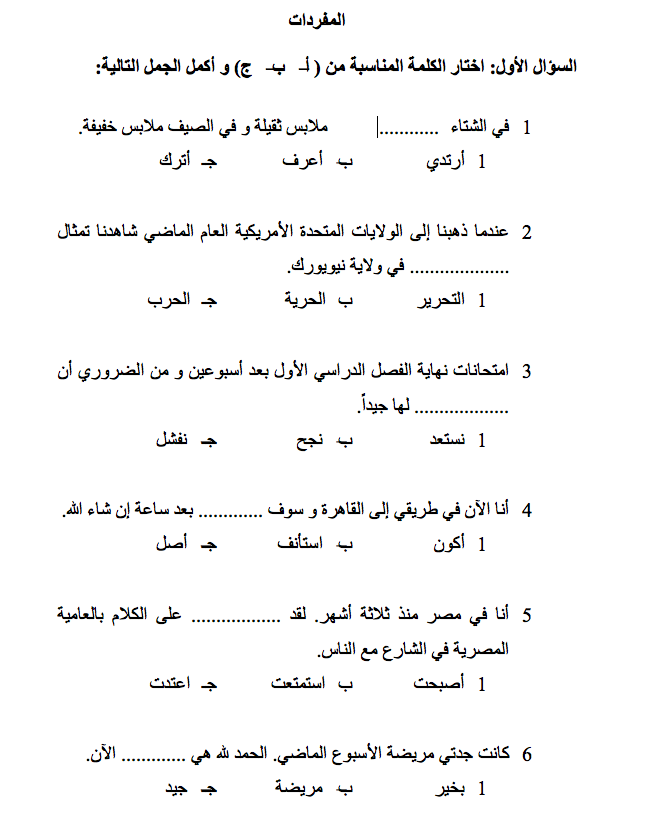
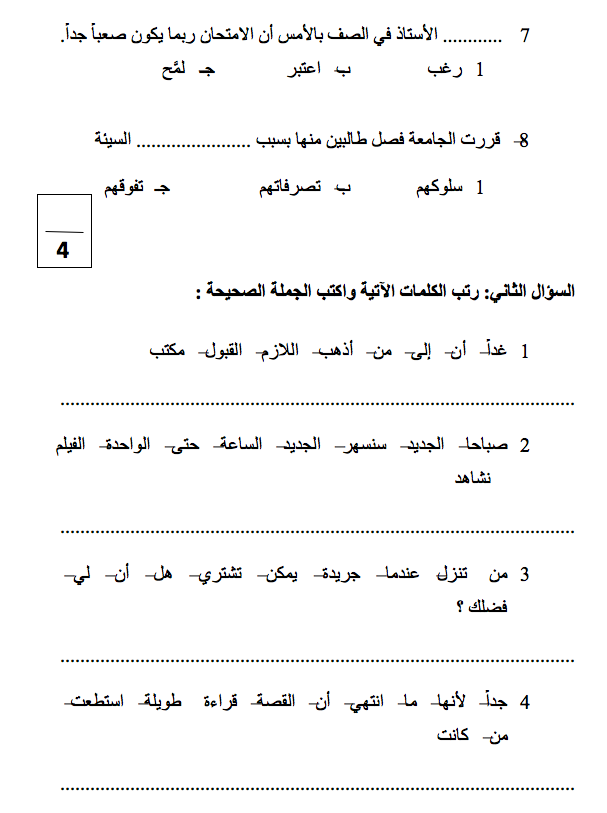
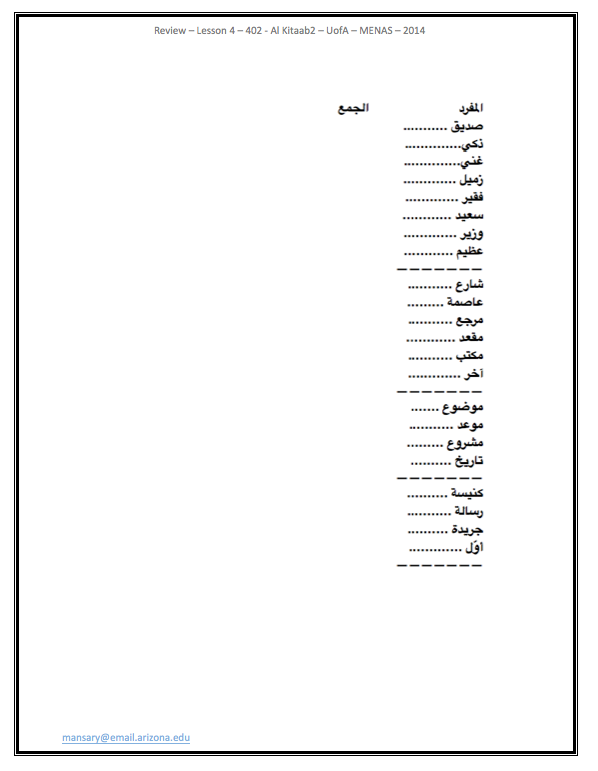
The following drills are taken from Mahdi Alosh’s Ahlan Wa Sahlan:
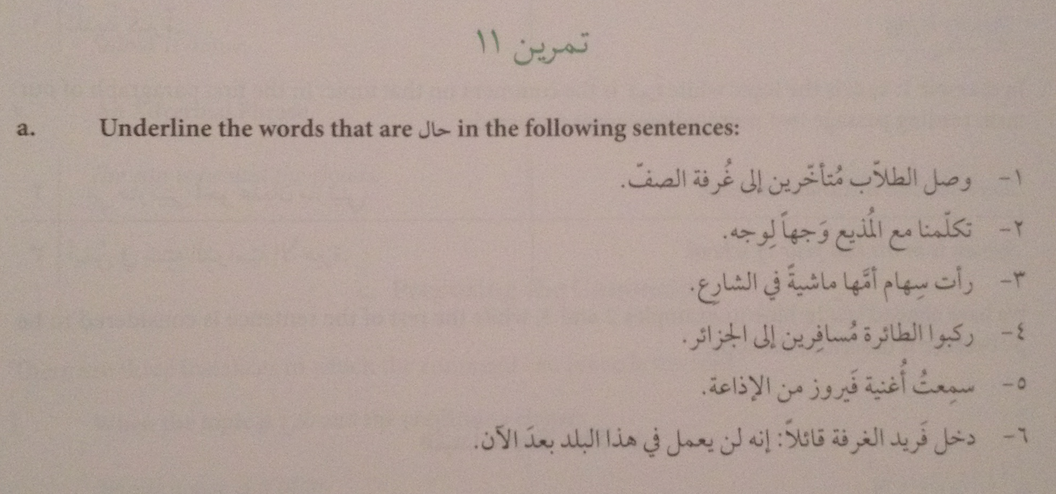
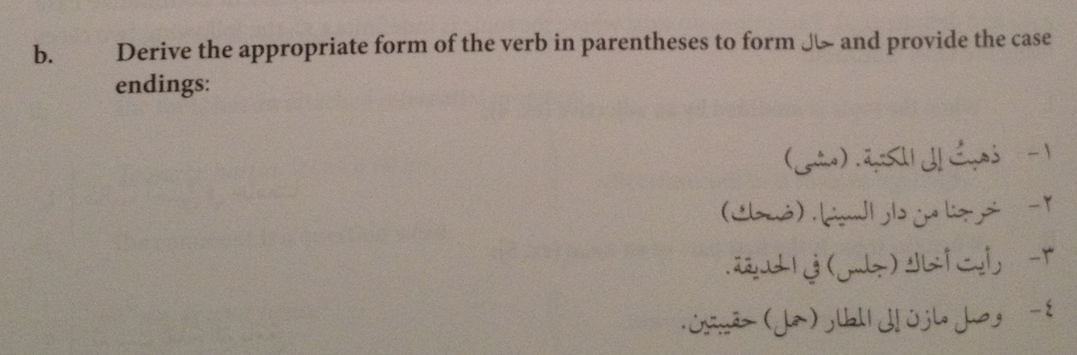
=========================================================
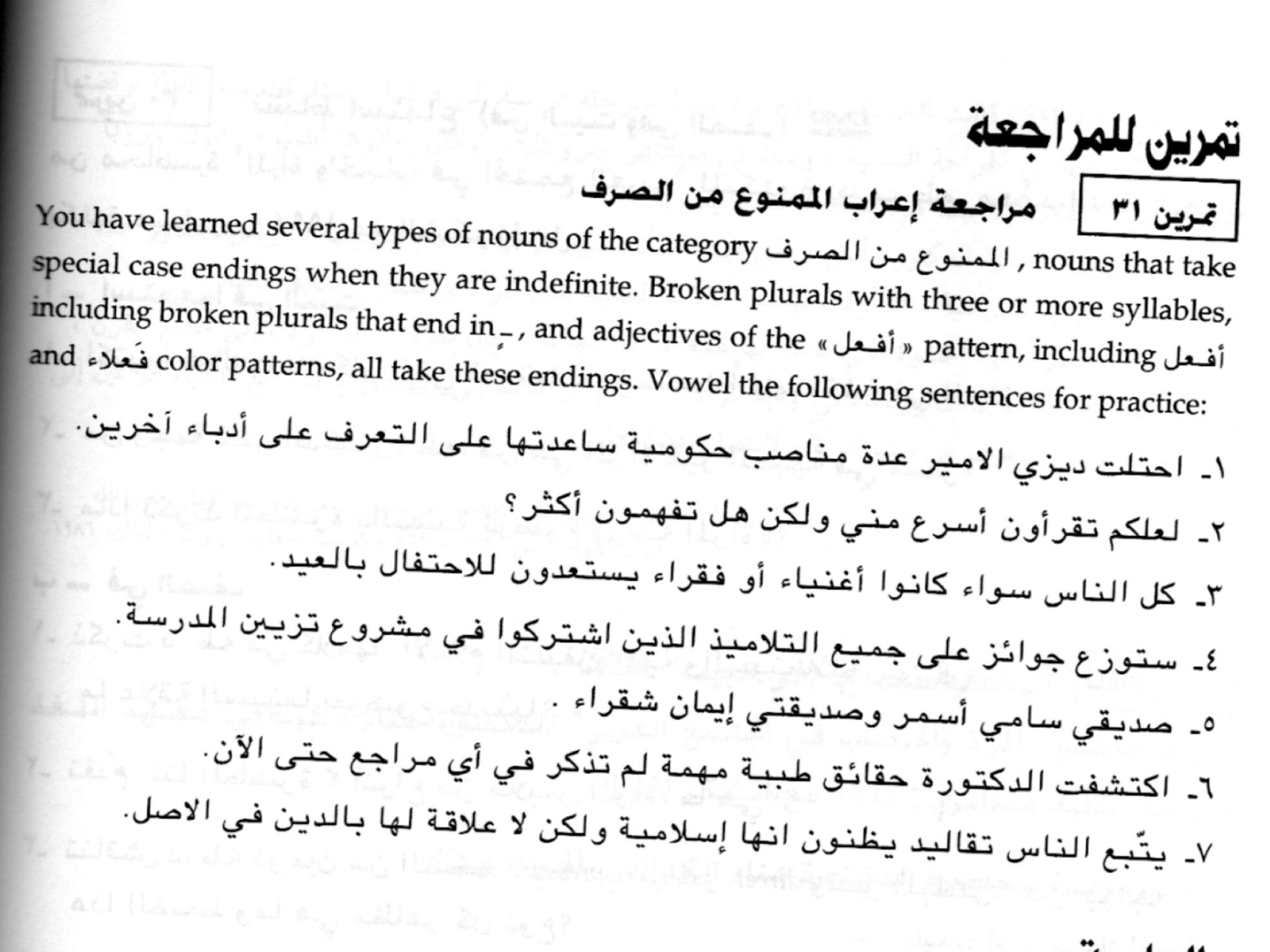
=================================================================
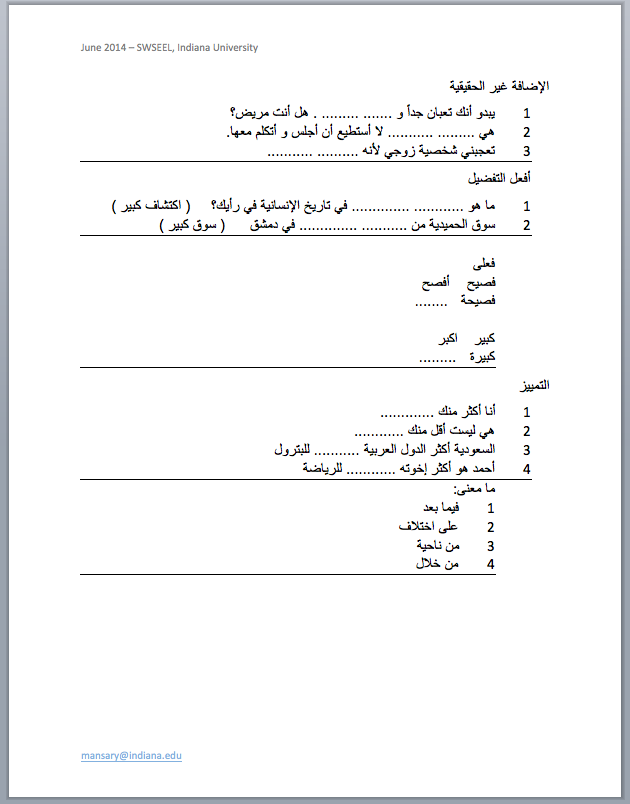
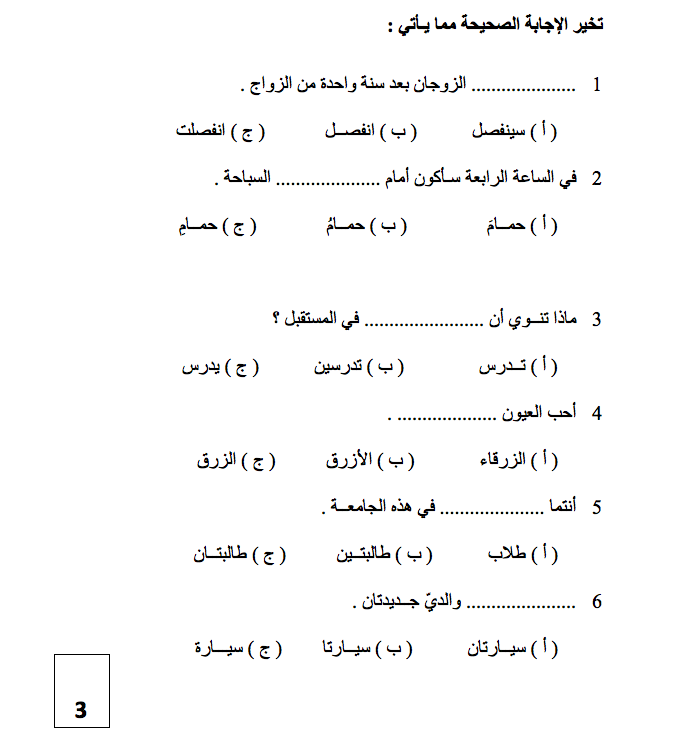
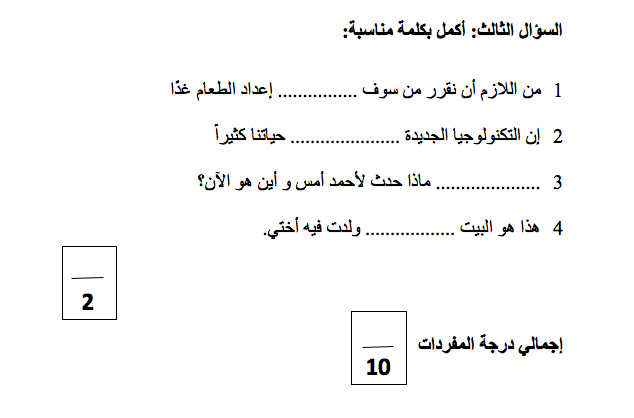
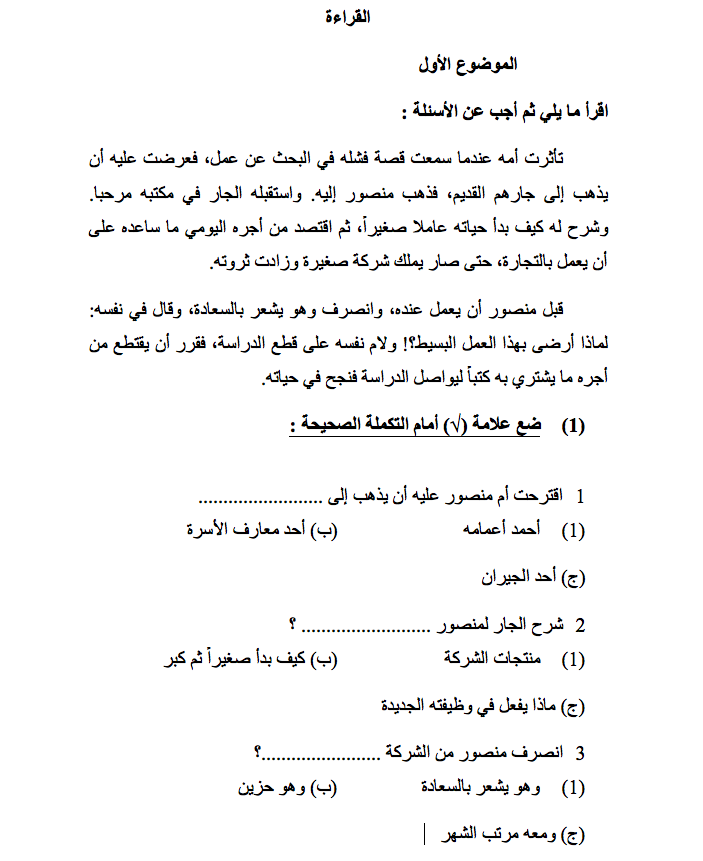
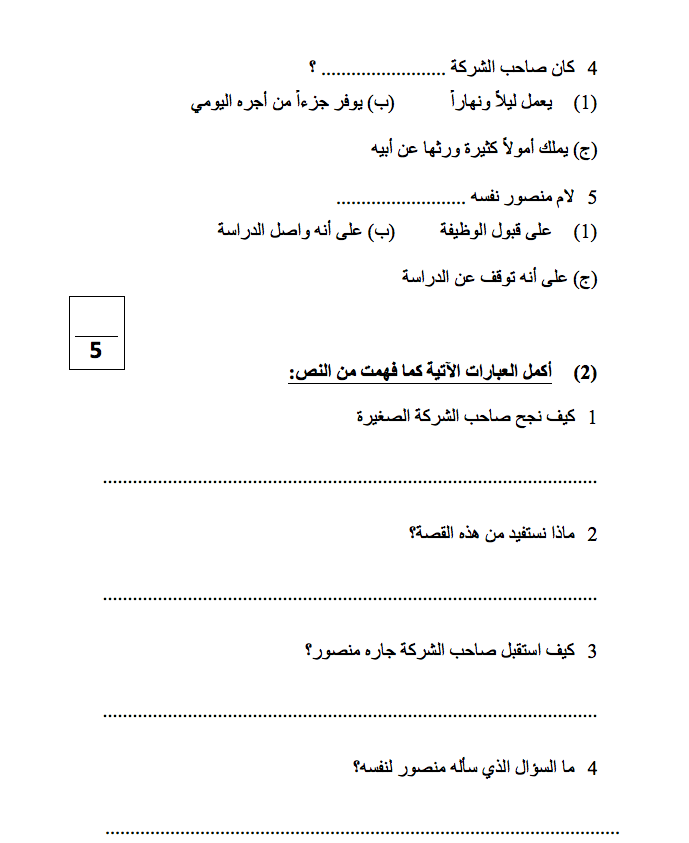
.jpg)
Uncategorized
Al Kitaab 2 – Lesson 5
Al Kitaab 2 – Lesson 5
الكتاب الثاني – الدرس الخامس
شخصيات من الأدب العربي الحديث
============
الكتاب الثاني – الدرس الخامس
شخصيات من الأدب العربي الحديث
============
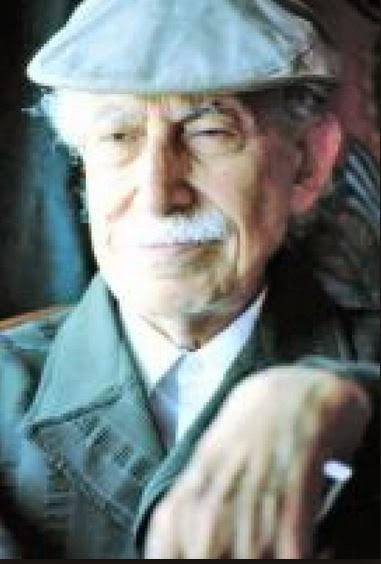
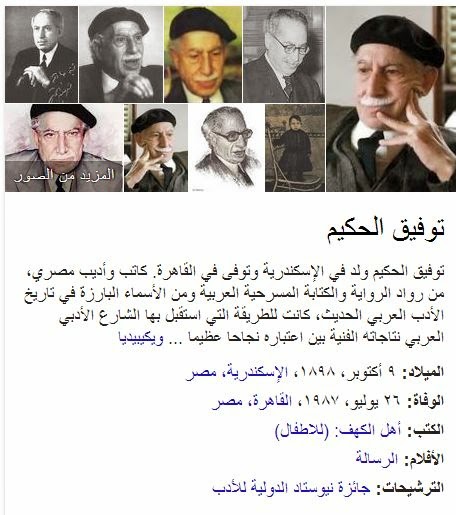
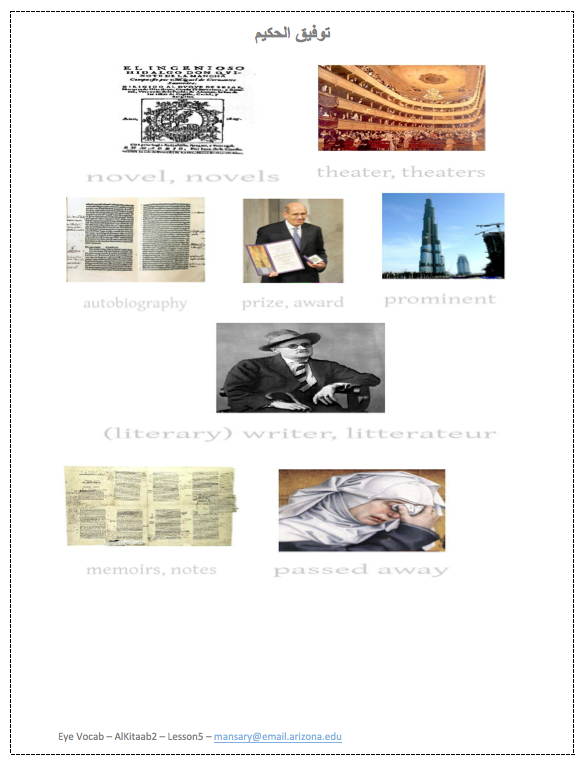
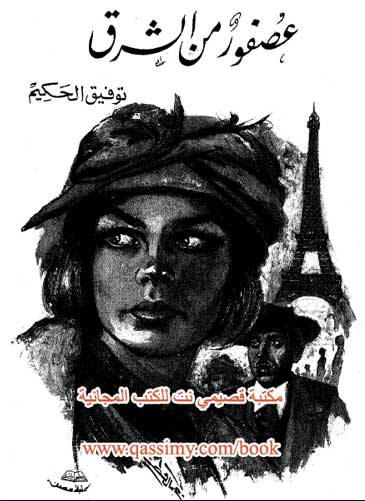
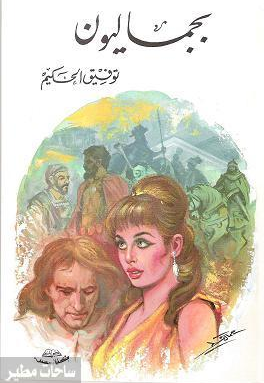
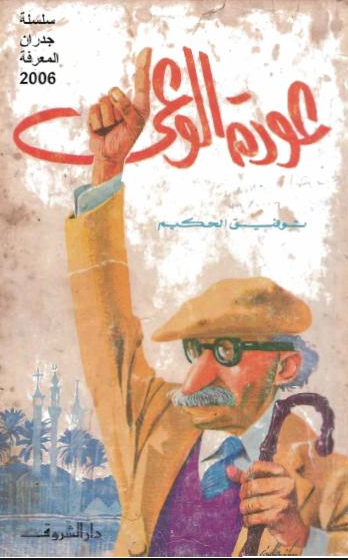
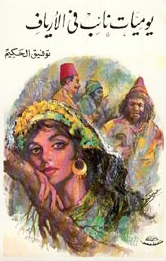
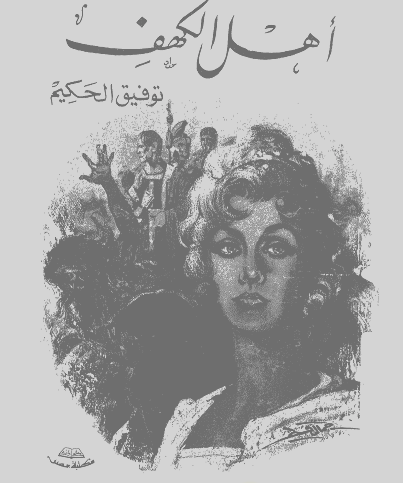
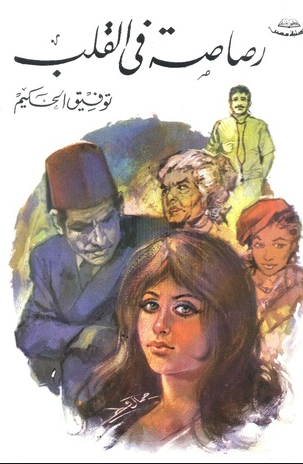
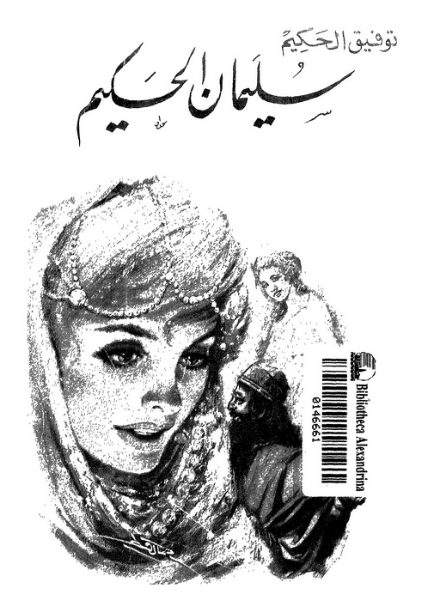
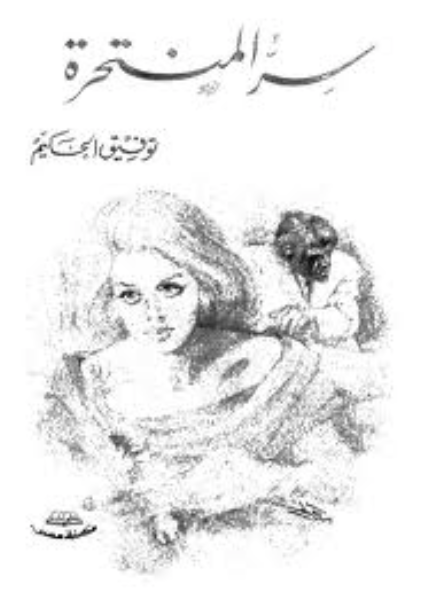
الأديب توفيق الحكيم
====================================
=================================
============================
أدباء آخرون
عرب وغربيّون
Other Arab and Western (literary) writers
Source: Wikipedia
============
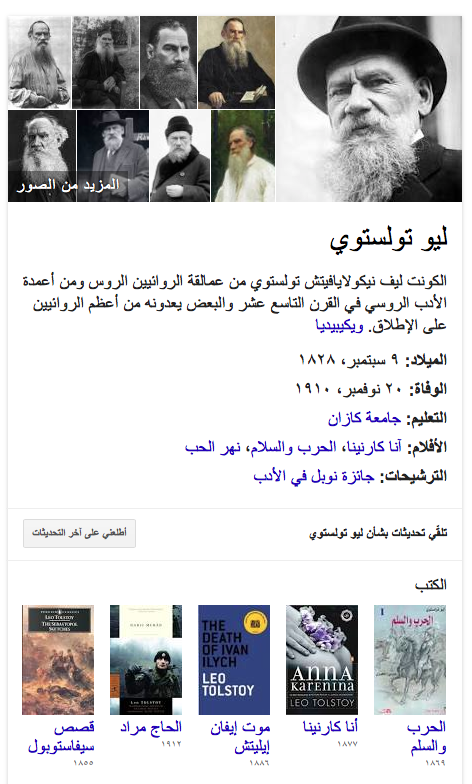
Count Lev Nikolayevich Tolstoy
Novelist, short story writer,playwright, essayist
تولستوي
الأديب العالمي
================================================
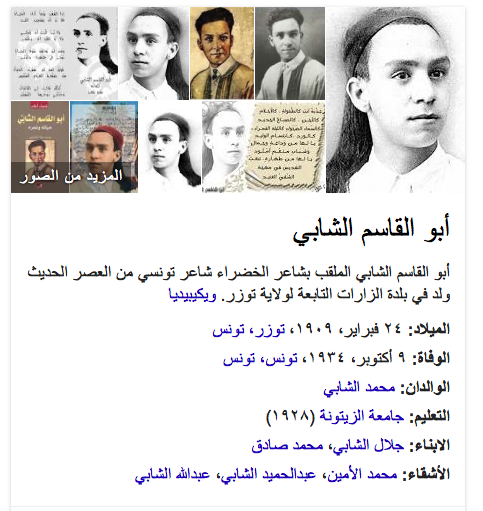
Aboul-Qacem Echebbi (Arabic: أبو القاسم الشابي Abū al-Qāsim ash-Shābbī) (24 February 1909 – 9 October 1934) was a Tunisian poet.
أبو القاسم الشابي
الشاعر التونسي المشهور
إذا الشعــب يومــا أراد الحيــاة فلا بـــد أن يستجيب القــدر
ولا بـــد لليــــل أن ينجلـــي ولابـــــد للقيـــــد أن ينكســـــر
=================================================
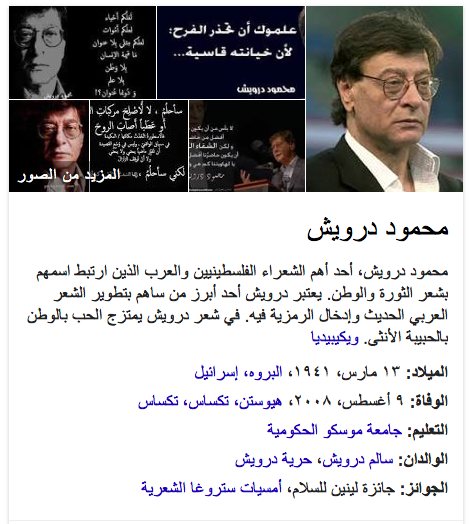
Mahmoud Darwish (Arabic: محمود درويش) (13 March 1941 – 9 August 2008) was a Palestinian poet and author who won numerous awards for his literary output and was regarded as the Palestinian national poet.
محمود درويش
الشاعر الفسلطيني المعروف
==========================================
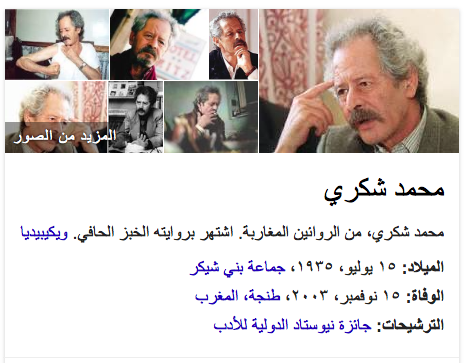
Mohamed Choukri (Berber: Muḥemmed Cikri, Arabic: محمد شكري), born on July 15, 1935 and died on November 15, 2003, was a Moroccan author and novelist who is best known for his internationally acclaimed autobiographyFor Bread Alone (al-Khubz al-Hafi), which was described by the American playwright Tennessee Williams as “A true document of human desperation, shattering in its impact”.
محمد شكري
الروائي المغربي المعروف
================================
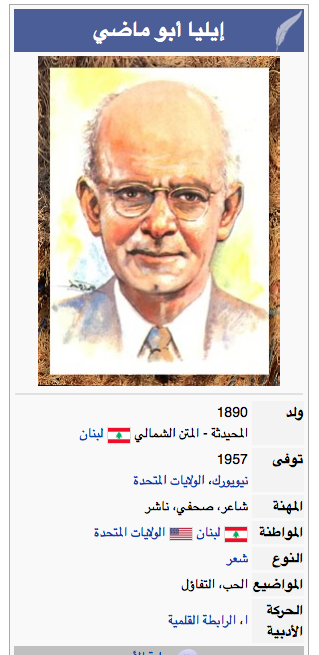
Elia Abu Madi (also known as Elia D. Madey; Arabic: إيليا أبو ماضي Īlyā Abū Māḍī [note 1]) (1889 or 1890 – 23 November 1957) was a Lebanese-American poet.
إيليا أبو ماضي
الشاعر اللبناني المعروف
=============================================
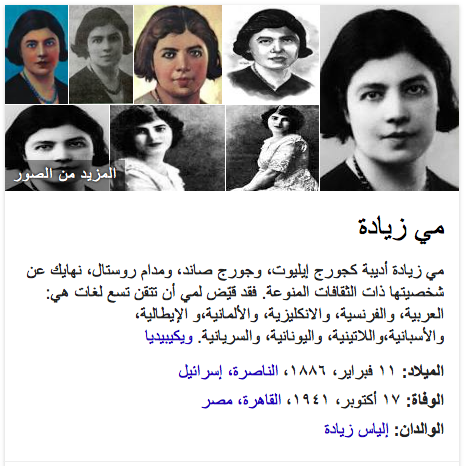
May Ziade (née Marie, with Ziade also written Ziadé, Ziyada or Ziadeh) (Arabic: مي زيادة) (February 11, 1886.[1][2] – 1941), was a prolific Christian[3] Lebanese–Palestinian poet, essayist and translator.
مي زيادة
الشاعرة اللبنانية المعروفة
====================================================
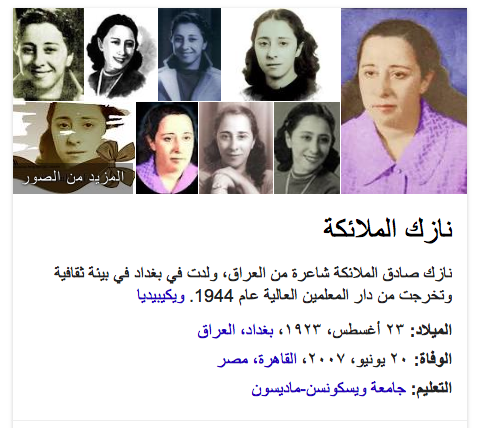
Nazik Al-Malaika (August 23, 1923 – 20 June 2007[1]) (Arabic: نازك الملائكة), Al-Malaika in English: Angels, she was an Iraqi female poet and is considered by many to be one of the most influential contemporary Iraqi female poets.
نازك الملائكة
الشاعرة العراقية المعروفة
========================================================
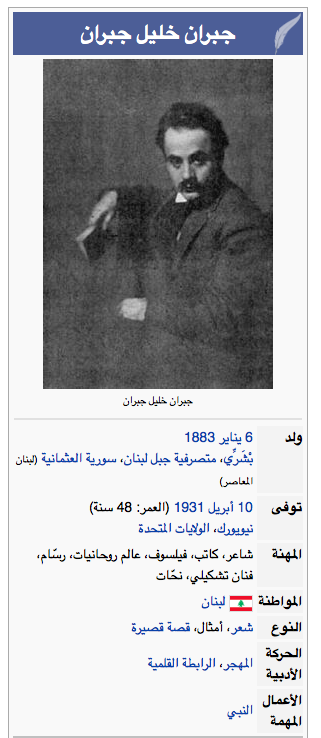
Jibran Khalil Jibran (January 6, 1883 – April 10, 1931) was a Lebanese artist, poet, and writer.
جبران خليل جبران
الشاعر اللبناني المعروف
======================================================
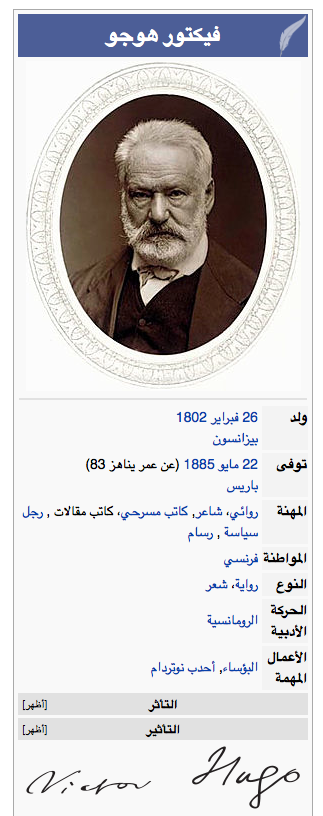
Victor Marie Hugo (French pronunciation: [viktɔʁ maʁi yɡo]; 26 February 1802 – 22 May 1885) was a French poet, novelist, and dramatist of the Romantic movement.
فيكتور هوجو
الشاعر والروائي الفرنسي
===============================================
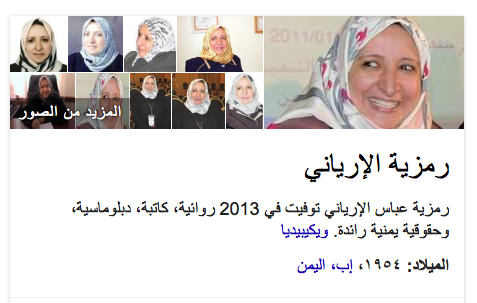
Ramzia al -Eryani’s, a Yemni writer.
رمزية الأرياني
كاتبة يمنية معروفة
===========================================
الطيب صالح
أديب سوداني مشهور

===========================================
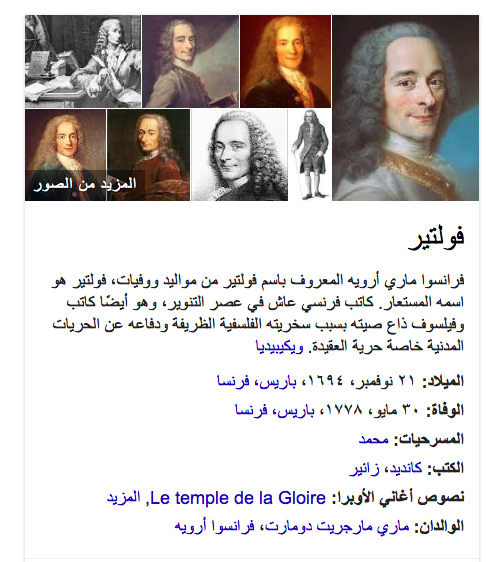
François-Marie Arouet : 21 November 1694 – 30 May 1778), known by his nom de plume Voltaire
Writer, philosopher, playwright
فولتير
الكاتب المسرحي والفيلسوف الفرنسي المشهور
==============================================
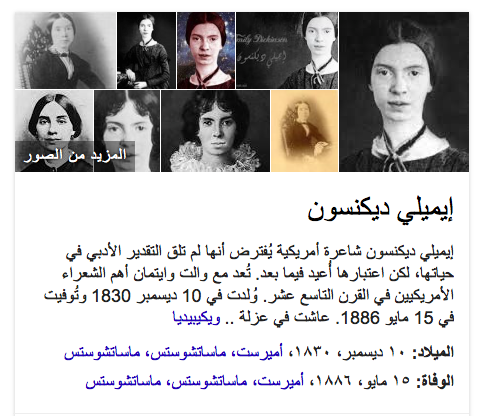
Emily Elizabeth Dickinson (December 10, 1830 – May 15, 1886) was an American poet. Born in Amherst, Massachusetts, to a successful family with strong community ties, she lived a mostly introverted and reclusive life
إيميلي ديكنسون
الشاعرة الأمريكية المشهورة
===============================================
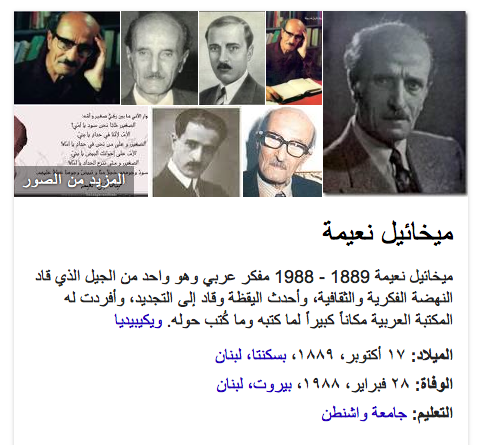
ikha’il Na’ima (also spelled Mikhail Naimy; Arabic: ميخائيل نعيمة) (b. 1889 in Mount Sannine in modern day Lebanon, d. 1988) was a Lebanese author and poet of the New York Pen League.
ميخائيل نعيمة
الشاعر اللبناني المشهور
=====================================================
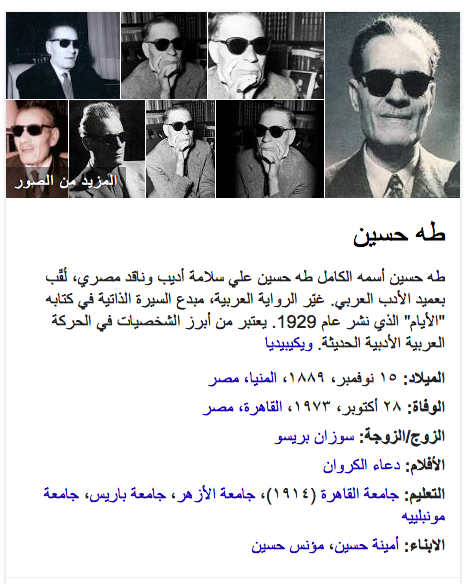
Taha Hussein (November 15, 1889—October 28, 1973)
The Dean of Arabic Literature
طه حسين
عميد الأدب العربي
==========================================
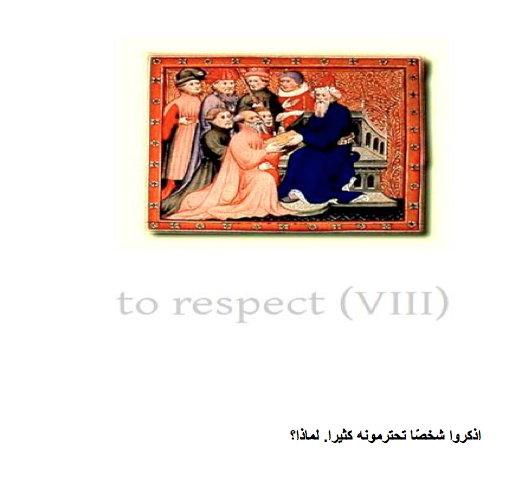
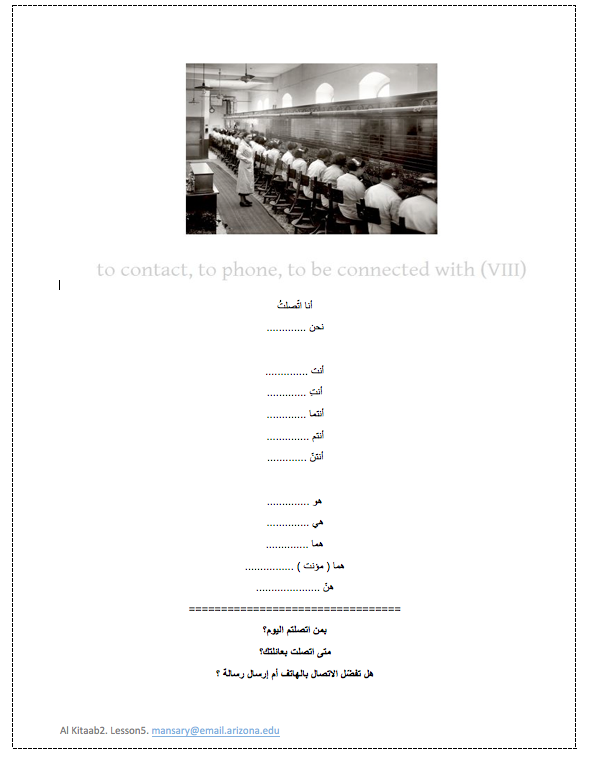
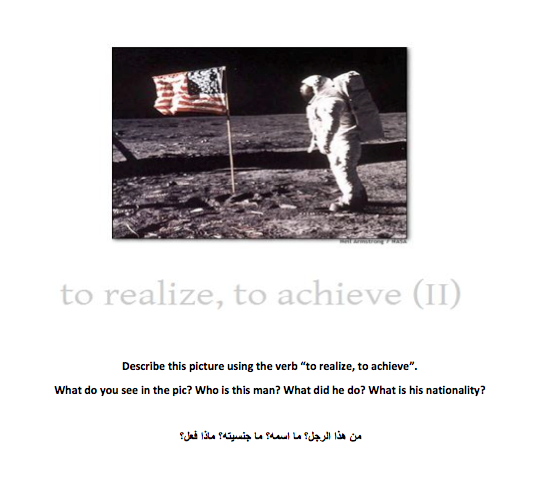
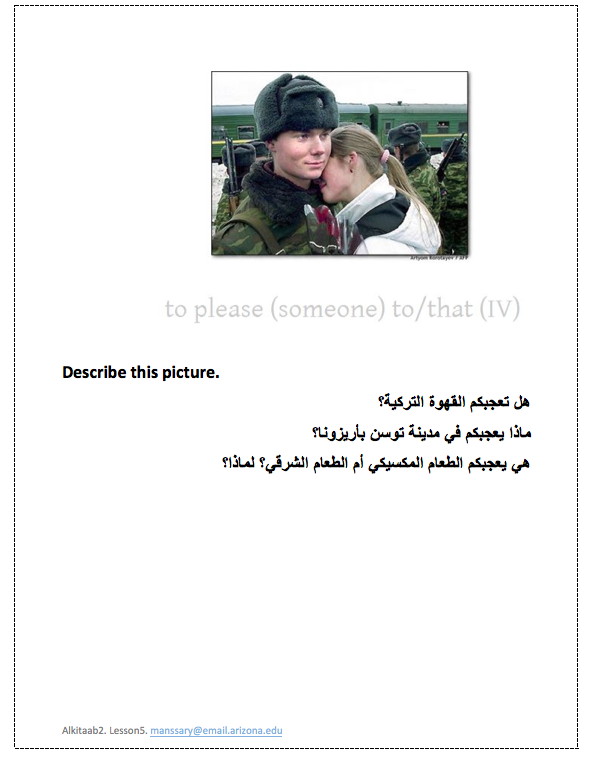
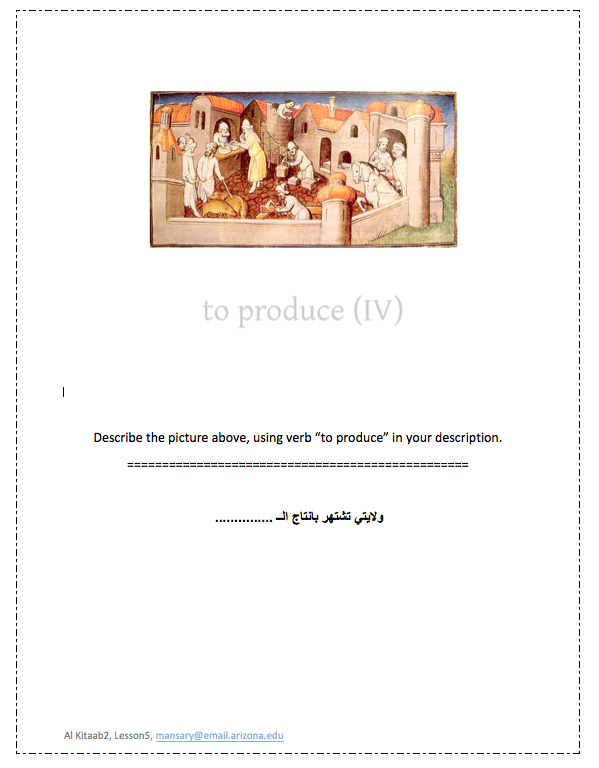
تفعيل أفعال الدرس الخامس
Activating the verbs of lesson 5
=====================================
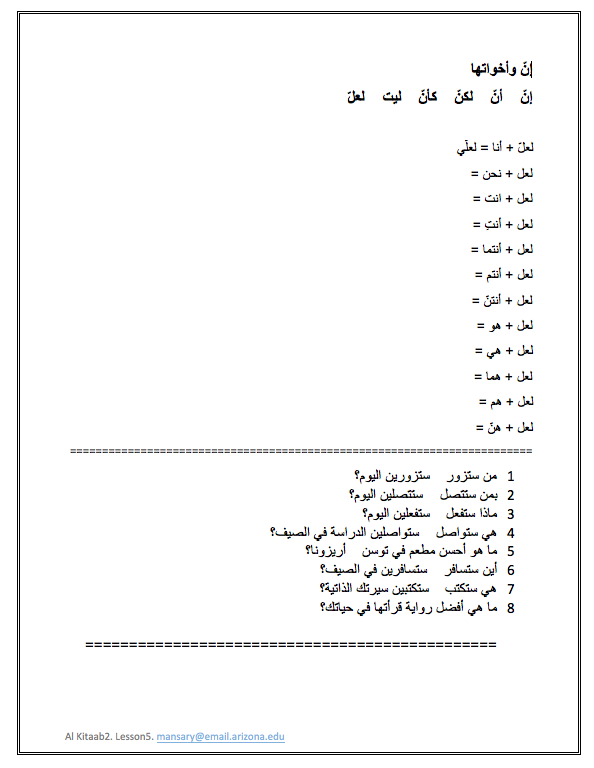
القواعد
Grammar
=============================
الأوزان
Patterns

=============================================
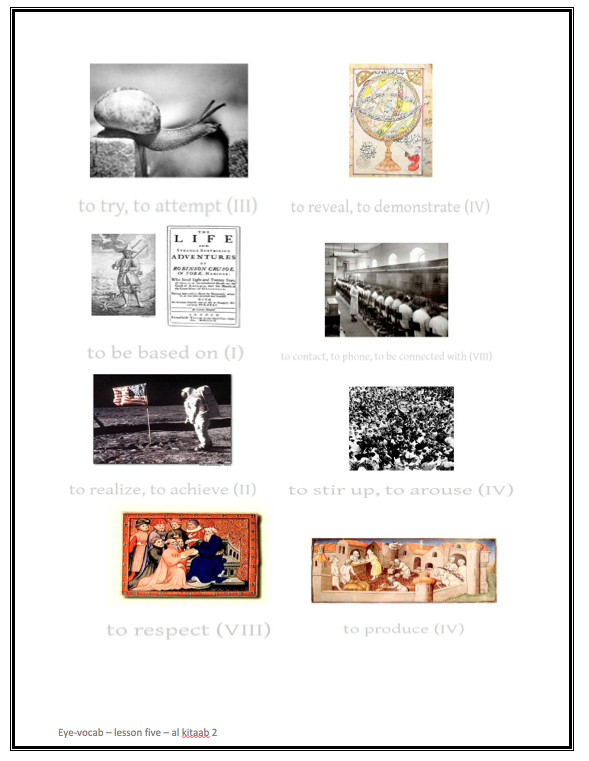
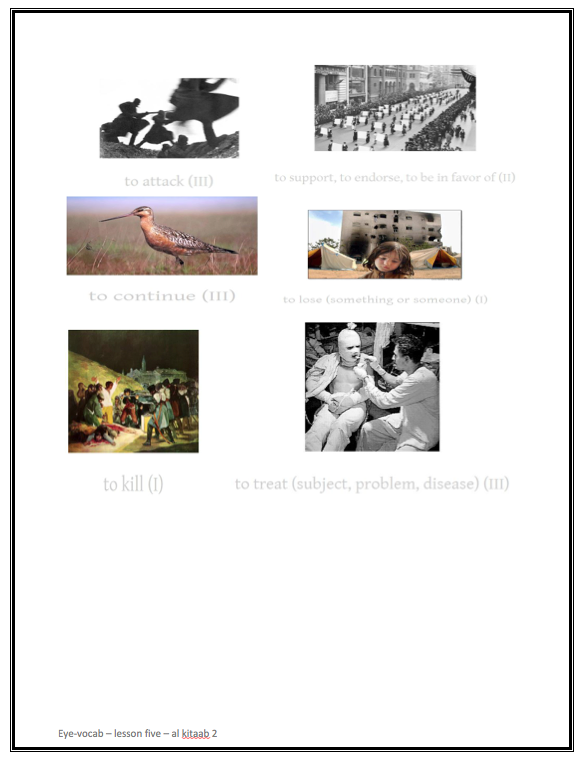
كل أفعال الدرس الخامس
A list of all the verbs of lesson 5
===================================
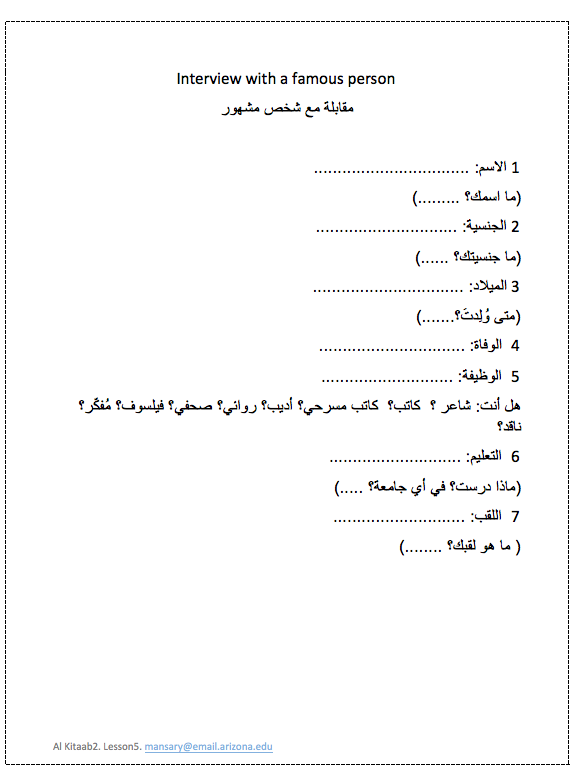
====================================
تمارين استماع مناسبة للدرس الخامس
الشاعرة السورية كوليت خوري
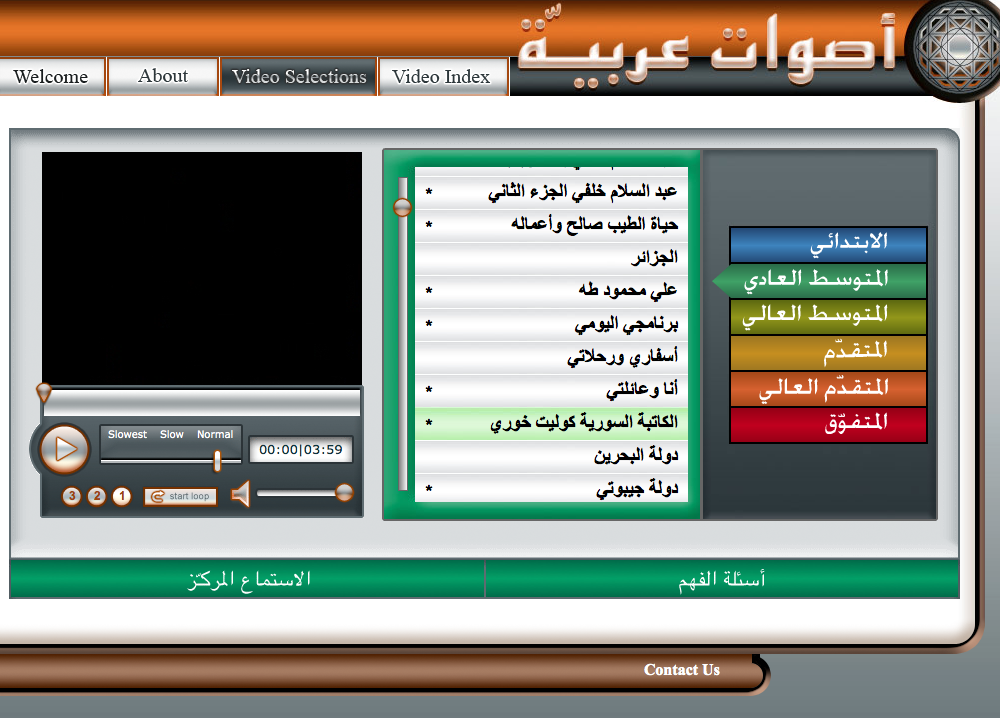
http://www.laits.utexas.edu/aswaat/video_s.php#/1/colette_khoury_int_hi/
الشاعر إبراهيم ناجي
http://www.laits.utexas.edu/aswaat/video_s.php#/2/ibrahim_nagi/
الكاتبة نوال السعداوي
http://www.laits.utexas.edu/aswaat/video_s.php#/2/nawal_alsadawi/
==========================================
(adsbygoogle = window.adsbygoogle || []).push({});